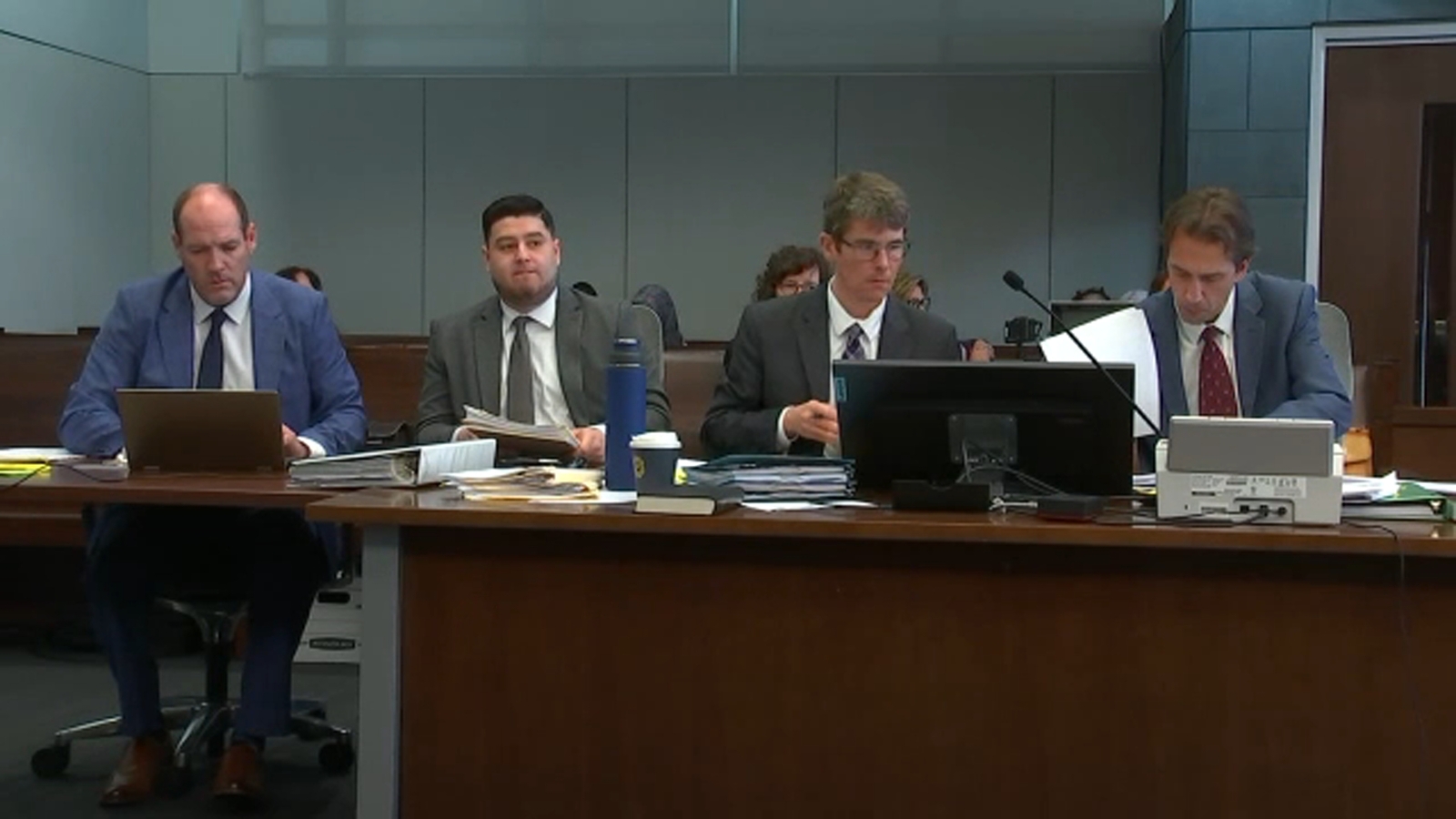
A forensic scientist testified Thursday that advances in DNA technology helped uncover new evidence in the 2012 killing of Faith Hedgepeth

abc11.com
Defense challenges DNA evidence collection in Faith Hedgepeth murder trial
Jurors spent another day hearing detailed forensic testimony in the Faith Hedgepeth murder trial, with defense attorneys beginning their cross-examination of the state's DNA expert and focusing on what they contend were shortcomings in the handling and testing of evidence.
Erin Ermish, a forensic scientist with the North Carolina State Crime Lab, was the only witness to testify Thursday.
Ermish's role at the crime lab includes analyzing biological evidence such as blood, semen and saliva. She testified that she first examined evidence in the case in 2012, but re-examined several items in 2021 using updated DNA testing technology that allowed scientists to analyze additional portions of DNA profiles.
According to Ermish,
DNA profiles from a Bacardi rum bottle, a blue Riesling wine bottle, a white bag, Faith Hedgepeth's boxer shorts and samples collected from Hedgepeth's body included DNA from defendant
Miguel Salguero Olivares.
During direct examination, Ermish explained one of the DNA mixtures analyzed in the case.
"The mixture contains two interpretable components, and Faith Hedgepeth, the donor of the known sample, is assumed as being a contributor of DNA to this mixture. The DNA profile obtained from Miguel Enrique Salguero Olivares is included as a possible contributor to this mixture profile, and the DNA profile obtained from Karina Rosario is excluded as a contributor to this mixture profile," Ermish testified.
As cross-examination began Thursday afternoon, defense attorneys focused on evidence collection and testing decisions, attempting to cast doubt on the state's DNA evidence.
Attorneys questioned Ermish about items that were not tested, including a piece of paper found between Faith Hedgepeth's cellphone and its case. The defense repeatedly asked why the paper was not swabbed for DNA.
"There was a piece of paper there that I guess was in between the cell phone case and the cell phone itself. Did you take any swabs from that?" a defense attorney asked.
"No," Ermish responded.
"Any reason why?"
"My primary purpose for examining this item was the cell phone."
"And not the piece of paper that was contained with the cell phone? You didn't want to know whose biological material might be on a note or a piece of paper with the cell phone that's got blood on it?"
"As far as the piece of paper itself, that was included with the phone. But my understanding was the phone was the item that needed to be analyzed," Ermish replied.
The defense also questioned Ermish about other evidence collected from the apartment that was not tested, including pillows, bed sheets and a comforter, as well as how many times Hedgepeth's boxer shorts were handled before reaching the crime lab.
The
lengthy scientific testimony appeared taxing for some jurors. At one point, a juror sent a note to the judge asking how much longer the trial is expected to last.
The judge reminded jurors that proceedings could continue for five to six weeks.
Faith Hedgepeth's loved ones remained a strong presence in the courtroom, filling three rows of seats throughout the day as they listened to testimony. The defendant's mother has also been present in the courtroom this week.



:max_bytes(150000):strip_icc():focal(674x229:676x231)/faith-hedgepeth-3-b7688c5fc6e841cdae50d1d0d85f6100.jpg)