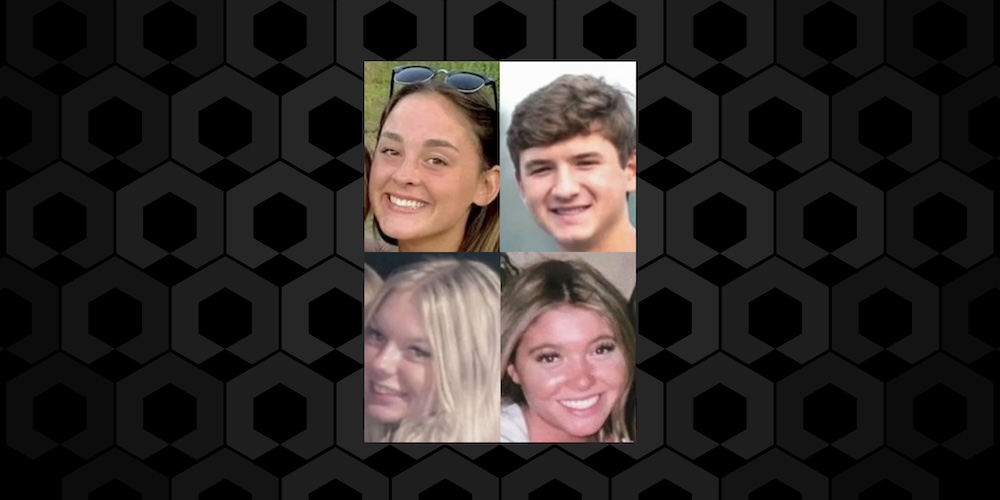
There was a lot of talk early on about which "genealogical DNA" testing or companies they used. Confirmation that Othram was involved.
Idaho State Police Forensic Services, Moscow Police Department, and FBI Team with Othram to Identify the Suspect in a 2022 Quadruple Homicide

dnasolves.com
During the initial forensic examination, investigators recovered unknown male DNA from the snap of a knife sheath found near one of the victims. Traditional STR testing was used to generate a DNA profile, which was then submitted to the CODIS database. However, no match to a known individual was found.
At the time, Othram had an existing contract with Idaho State Police Forensic Services (ISPFS) to support forensic DNA analysis. The two organizations had successfully collaborated on cold cases in the past. However, this marked the first time ISPFS considered applying Othram’s advanced technology to an active, real-time homicide investigation. Investigators reached out to determine whether Othram’s forensic sequencing and genealogical tools could help identify the source of the unknown male DNA and move the case forward.
Representatives from Idaho State Police Forensic Services and the Moscow Police Department personally transported the forensic DNA evidence to Othram’s laboratory in The Woodlands, Texas. Using the same forensic DNA evidence that had previously been used to generate the STR profile, Othram scientists applied Forensic-Grade Genome Sequencing® to develop a high-resolution SNP profile. The profile was developed in a matter of days, reflecting the urgency of the active investigation where a continued public threat would continue to exist until the suspect could be identified.
This was an unprecedented process at the time, demonstrating that high-resolution forensic DNA profiles could be generated real-time to support active investigations.
Shortly after the development of the SNP profile, forensic genetic genealogy enabled law enforcement to identify close relatives of the unknown suspect. These leads quickly converged on a single individual, Bryan Kohberger.
In December 2022, investigators collected a DNA sample from discarded trash outside the Pennsylvania home of Kohberger’s parents, where he was visiting during winter break. A forensic DNA profile was developed from the discarded trash and then compared to the forensic DNA profile generated from the crime scene evidence. The comparison helped law enforcement link Bryan Kohberger to the crime scene.
This case exemplifies why Othram was built—to overcome the limitations of traditional forensic DNA technology and bring certainty to investigations, whether current or cold. It marks the beginning of a new era in criminal justice, where answers are possible for everyone, regardless of circumstances, origin, geography, or time.