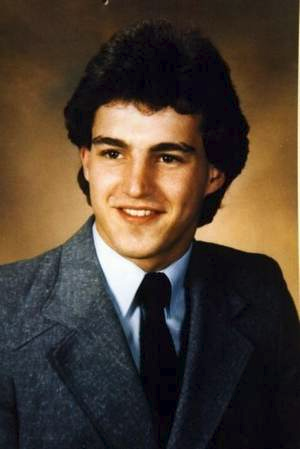
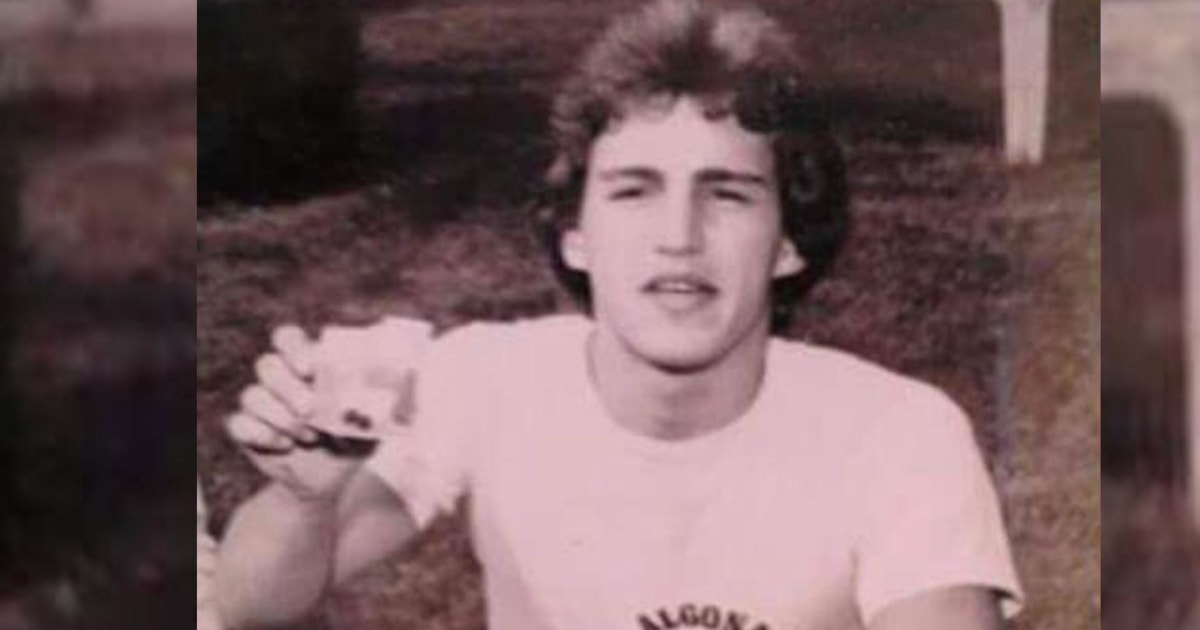
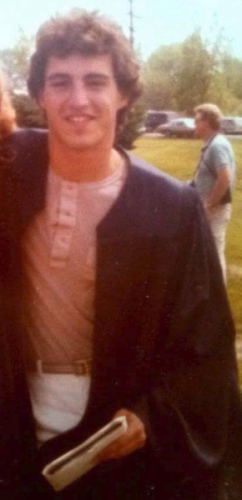
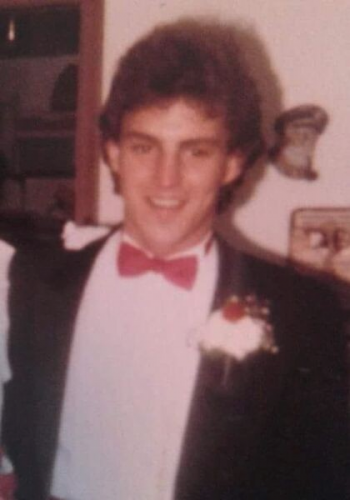
SHAWN PATRICK RAYMOND: Disappeared from Gay bar in Detroit on July 21, 1983 / skull found in 1992 - Age 19

1592736236865.png


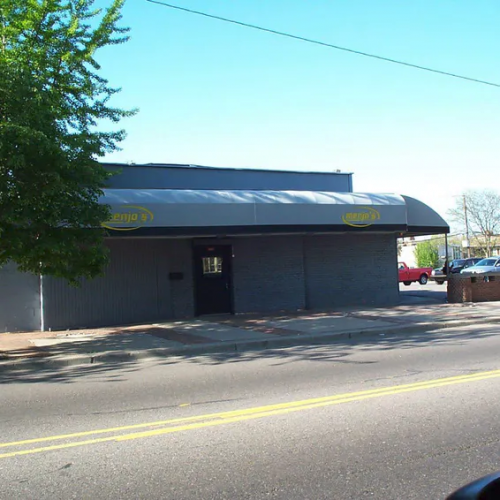
Shawn was last known to be at Menjo's Bar, a gay bar in Detroit, MI. His skull was found in 1992 in the Clinton River in Mount Clemens, it is believed that he was a homicide victim. The rest of his body has not been recovered.
 

Family prays for answers 35 years after Algonac man went missing

Liz Shepard, Times Herald Published 10:13 a.m. ET Aug. 1, 2018 | Updated 12:15 p.m. ET Aug. 1, 2018

Thirty-five years ago, when her big brother was graduating from Algonac High School, 14-year-old Kit Coyners slipped a card under his bedroom door.

She idolized her brother, the guy who got along with everybody and every girl wanted to know.

Shawn Raymond opened the door to find his little sister crying outside. "Every Breath You Take," by the Police was playing on his stereo.

"He said, 'I'm only graduating, I'm not going anywhere, I'll always be there for you,'" Coyners said. "And less than a month later he was gone. That song can still bring tears to my eyes."

Coyners, who now lives in Florida, said she has been speaking about the case recently in hopes of unearthing new leads and finding answers to what happened 35 years ago.

"I feel we're supposed to know the end of his story," she said.

Shirley Raymond, their mother, said she needs to know what happened.

"Yes I’m angry, yes I’m emotional, yes I miss my kid more than anything in the world. But somebody out there’s got to know something," she said. "And it's not closure until I get it and I hope I get it before I die, but I’m 86 already."

He simply vanished. It wasn't until years later that his family learned he had died — murdered.

Shawn, 19, worked at a restaurant in Algonac. On the last day he was seen alive, he had plans to go to a gay bar in Detroit with friends. Coyners said being gay or bisexual in a small town in 1983 kept many people quiet when investigators started looking into why Shawn hadn't come home the following day.

"In 1983, you just didn't talk about stuff like that," she said.

Coyners said some of Shawn's friends hired lawyers, some took polygraphs, some refused, some passed, some failed, and more lawyers got involved.

"I don't understand if you had nothing to do with anything or no knowledge of anything, why would you not want to talk to the police if that was your friend," she said.

They didn't find Shawn. They didn't find his car. For 21 years, there was nothing.

"For that 20, 21 years we had no idea," Coyners said. "We lived a nightmare for that long, so there was always this little sliver of hope that maybe he was still alive, just whooping it up somewhere. But I knew in my heart he wouldn’t do that my mom, to the family."

Shirley Raymond said her son was compassionate and caring and kind to everyone.

"Well, he was the greatest kid you could ever want to have," she said.

An unidentified skull

The first break in Shawn's case came in 1992.

A skull was found in material dredged out of the Clinton River in Harrison Township. But it wasn't identified as Shawn's until 2004.

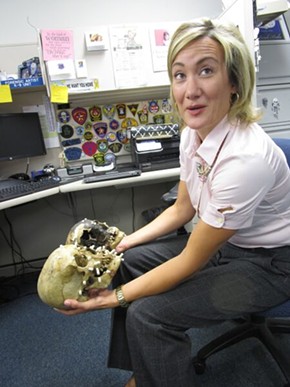
Michigan State Police Detective Sgt. Sarah Krebs is a forensic artist and was a road patrol trooper when she received the skull after it had been sitting in a Macomb County Sheriff Department evidence room for years.

"That case has definitely formed a foundation for what I do today," said Krebs, who now runs a statewide missing persons unit.

While the family didn't recognize the face she reconstructed by layering the skull with clay, someone did, and Shawn was identified through dental records.

Krebs said the case was her first identification through forensic art.

"It really made me a victims' advocate for the family members of missing persons," she said.

While Krebs' job doesn't usually allow her to see cases full circle, she is still in contact with the Raymond family.

Shirley Raymond credits Krebs and the original Michigan State Police investigator on the homicide, Patrick Young, for going beyond expectations for Shawn.

"These two who worked on this case, Patrick Young and Sarah Krebs, they couldn't have done anymore," she said.

Raymond said she was devastated when she learned the skull was her son's, and also angry that it had taken so long to discover.

"Nothing happened until the Michigan State Police got into it," she said. "And I thank God that the lord sent Patrick Young and Sarah to us or we never would have known nothing — nothing at all."

Young, now commander of the Michigan State Police Major Case Unit embedded with the Flint Police Department, said he still believes the case will be solved.

"Absolutely, somebody knows, there is somebody or more than one person out there that knows exactly what happened, no doubt in my mind," Young said.

He said the case has regularly been discussed between himself and a detective at the Michigan State Police Lapeer Post.

"As many homicides as we get in Flint, a case like Shawn Raymond, I can't forget it," Young said.

Time hasn't eased the pain
"For me, I can't set this down and walk away and not ever think of it again.”
The pain of losing a child and not knowing what happened hasn't eased for Shirley Raymond as the years have moved by.

"It just makes it more devastating that you don't know what happened, or why," she said. "Why couldn't they put his body in the car and parked it some place so we would know right away. Why did they have to dump it in the river weighted down?"

She and Coyners both believe more information has to be out there and the case isn't closed.

"Obviously people know something, people were afraid to talk, I just pray that it has been so long, maybe its been weighing on someone's heart," Coyners said.

Shirley Raymond said she can feel the presence of her son around her.

She hopes people will talk to police.

"Even something little, something they can grasp on to," Shirley Raymond said.

"The contractor that was dredging the river, they piled the dirt up on the side and he said it started to rain so hard, so he left and went home, and it rained like that for three days, and he said when he came back to finish the job, Shawn's skull was sitting on top and he said he’ll never forget that feeling in all his life because it was like somebody crying out for help."

Anyone with any information about what happened to Shawn Raymond is asked to call the Michigan State Police at (855) 642-4847 or email at Msp-missingpersons@michigan.gov.

"For me, I can't set this down and walk away and not ever think of it again," Young said.
 

Still no arrests on 35 years after murder of Michigan teen Shawn Raymond
by Juliet Muir

As a student attending Algonac High School, 19-year-old Shawn Raymond was special. He was extremely well-liked, his sister Kit Raymond-Coyners told Dateline.

“He was good looking, had a good sense of humor, and he was down to earth,” she said. According to Kit, who was four years younger than Shawn, “He was very popular in school had a lot of friends.”

Shawn was one of five siblings. His other sister, Tracy Raymond-Kohmann, told Dateline they were a very tight-knit family.

“All of us were close siblings,” she recalled to Dateline. “Shawn was extremely loving and very caring.”

Shawn graduated in the summer of 1983. He was working at a restaurant in Algonac, Michigan and had plans on attending Macomb Community College in the fall, his mother Shirley Raymond told Dateline.
Shawn had also recently come out as gay to his mother and was learning how to become comfortable with his identity.

On the night of July 21, 1983, Shawn finished his shift at the restaurant, and had plans to go out in Detroit with his friends, Shirley said.

“He was supposed to meet up with them,” Shirley told Dateline. “Shawn was just 19, so he was old enough to spend the night away from home. But he always let me know.”

Shawn and his friends went to Menjo’s, a gay bar in the city. Michigan State Police Lieutenant Patrick Young confirmed to Dateline that Shawn was last seen around closing time. Shawn, who had driven to the city in his Chevy, did not come home that night.

The next morning, Shirley was worried that she hadn’t heard from her son. “No matter what he did, or where he was, [he] would have called Mom,” Shawn’s sister Tracy told Dateline.

So, Shirley went through her son’s phone bill to get his friends’ phone numbers and started calling around.

Shawn’s two older brothers drove to Detroit to search for him that day, their mother said. When days went by without word from Shawn, Kit says her family began making flyers to get the word out about her brother to try to find out what happened to him.

Days became months, and months became years.

And then, in September of 1992, a skull was found in the Clinton River near Harrison Township, Michigan. According to Lt. Young, every few years the river gets dredged and it was during one of those dredgings, that workers came upon the unidentified skull. It was turned over to the Michigan State Police, and remained in their custody until March of 2004.

At that time the skull was given to Sergeant Sarah Krebs, a forensic artist, to try to identify.

“It was the very first case I took on as a forensic artist,” Sgt. Krebs told Dateline. She worked on the 3-D facial reconstruction in her free time by using clay to mold a face to match the skull.

Months later, Sgt. Krebs said the department released an image of the skull. They then received a tip from another police officer saying that the reconstruction resembled a man he had worked with at a restaurant years earlier, who had gone missing: Shawn Raymond.

Sergeant Krebs was then able to match the skull to Shawn using dental records.

Twenty-one years after Shawn went missing, Lt. Patrick Young began working on his case as a homicide.

“We began reviewing the missing person reports and determined foul play,” Lt. Young told Dateline. “Between 2004 and 2010, we re-interviewed numerous friends and associates of Shawn.” Lt. Young says there have been no significant new leads since 2010.

The positive identification of her son’s skull was difficult for Shawn’s mother.

“You go through a range of emotions," Shirley told Dateline. “You're devastated, you're angry. Why couldn't they have found this out sooner,” she wondered on why it took police 12 years to identify her Shawn’s skull.

Of course, finding Shawn’s skull did not give the family any sense of closure, his sister Kit told Dateline.

“There's always been a part that's been missing, a big void in my life,” Kit told Dateline. “We still don’t know what happened to him.”

Older sister Tracy has her theory about what happened to Shawn. “I do think my brother was at the wrong place at the wrong time,” Tracy said. “I don't think it was personal or anybody that he knew.”

Shawn’s case is an active homicide investigation. Since he has since been promoted, Lt. Young is no longer the lead officer on Shawn’s case, but says he still checks on it when he can.

“This [case has] been on my mind. They all bother me, but this one really, really bothers me,” Lt. Young told Dateline.

He said there are two main suspects, whom he would not identify, in the murder of Shawn Raymond, but the department needs witnesses to come forward to make a break in the case.

If you have any information on the circumstances surrounding Shawn Raymond’s death, please contact the Michigan State Police at (855) 642-4847 or via email at Msp-missingpersons@michigan.gov.
 

1592737637332.png

The case that would become one of Krebs' first identifications began with one of those feeble police investigations. It was the case of Shawn Patrick Raymond of Algonac. In the summer of 1983, Raymond was an attractive, popular kid, a newly minted high school graduate looking at a bright future. He had embarked on a modeling career, signed up for classes at community college, and, at 19 years old, had reached the legal drinking age in Michigan. According to the family, Raymond had already come out to his mom as gay, and, on a fateful night in July, he drove down to Detroit, to meet friends at Menjo's Bar. He was last seen leaving that bar.

Back then, Kathleen "Kit" Conyers was Raymond's 14-year-old little sister. Now she's a mother of three working for the Pinellas County Sheriff's Office in Florida. She remembers, "It was totally out of character for him to not contact my mom in some way to let her know that he was OK. So we were immediately worried and everybody was scared."

Police in Algonac and Detroit, however, gave the case short shrift, Conyers says.

"They told my mom that he was an adult. He went to live his own life. Given that it was from Menjo's Bar, a gay bar, it was laughed at back then." She says the search for answers was also frustrated by witnesses who either dummied up or "lawyered up."

More than 20 years later, in October 2003, Krebs started facial reconstruction on a skull that had been dredged out of the Clinton River in 1992. As the skilled forensic artist worked, a face emerged. What happens next sounds straight out of a cheap crime novel: A sergeant Krebs worked with saw the face and swore he recognized it. It reminded him of a former co-worker at an Algonac restaurant. That co-worker's name was Shawn Raymond, and he pointed Krebs toward the case. Amazingly, dental records proved the sergeant correct.

But when the identification kick-started the investigation some 21 years later, the lack of results frustrated Conyers — though she praises Krebs and other state police for trying to restart an investigation "using 20-year-old notes written on scrap paper." Conyers says detectives were especially suspicious of one witness who said he'd speak to police, but kept putting it off for months and ended up getting a lawyer instead.

For all the nice things she has to say about the Michigan State Police, Conyers says the positive ID has offered little real relief. After the investigation stalled, she says, "Everybody went on with their life except for us."

"I don't know where people come up with the word 'closure,'" she says. "I mean, that's the first thing that everyone we knew said: 'Well, there you go. Now you have closure.' Well, not really. Because, like, for my mom, now we knew for sure he's not coming home. But, as a parent, she's still wondering: How did he end up in the water? Did he drown? Was it an accident? Did somebody kill him? Did he suffer? What were his last thoughts? You know, it brought up a lot more questions."
 
1592737937948.png
Menjos Gay Entertainment Complex
Bear, leather, Levi's Burly men in Levi's, drink specials, karaoke, and underwear contests can be found at this nightlife complex.

928 W. McNichols
Detroit, MI48203
 
Shawn Raymond was last seen leaving Menjo's Bar in Detroit, MI on July 21, 1983. His skull was recovered in the Clinton River near Harrison Township, Michigan in September 1992, but wasn't identified until 2004. The rest of Shawn's remains have not been found.

1592738520741.png

1592738604563.png

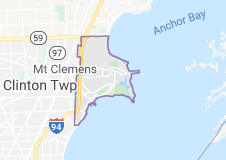
Harrison Charter Township is a charter township and a census-designated place of Macomb County in the U.S. state of Michigan. As of the 2000 census, the population was 24,461. The 2008 Census Bureau Estimate places the population at 26,004. Wikipedia
 
What jumps out at me is what is stated that several people stopped talking and "Lawyered up" that he knew. If these are his friends, Why would they do that?. Some failed the Polygraph. What?! He was seen at the bar around closing. His skull wasn't found till 92. From 83. There was alot of work to dispose of him. If it wasn't for the digging in the river he probably would still be in the river. It makes me think it was someone he knew. And why would the police not turn over the skull for so long for reconstruction?. It seems he was failed on so many levels. His poor Mother.
 

Menjo's opened in 1974. Madonna reportedly liked to hang out there in the mid-to late 70's before she became famous.
Classy
 

Still no answers 41 years after murder of teen whose skull was found in Clinton River​

Sunday marks 41 years since Shawn Patrick Raymond vanished while visiting Detroit with friends. Police believe he was murdered.

Shawn Patrick Raymond, 19, graduated from Algonac High School in 1983. The same year he vanished.

His sister, Tracy Raymond-Kohmann described Raymond as being extremely loving and very caring, according to an Dateline report from 2018. He was one of five siblings in a very tight-knit family. Raymond’s mother told Dateline that he had recently come out to her as gay and was learning how to become comfortable with his identity.

On July 21, 1983, Raymond went to Detroit with his friends. They spent time at Menjo’s, a gay bar in Detroit. Witnesses told investigators he was seen there around closing time. He did not return home that night. His family never saw him again.

In September 1992, a skull was found during a regular dredging of the Clinton River near Harrison Township. More than a decade later, in 2004, the skull was identified as Raymond. The rest of his body has not been recovered.

The case is considered a homicide.

Anyone with information about this case should contact the Michigan State Police Lapeer Post at 810-664-2905. The agency case number is 24-1381-04.
 

Who killed Shawn Raymond? 43 years later, family still searching for answers in unsolved murder​

It has been 43 years since Shawn Patrick Raymond walked out the door and never came back.

Michigan State Police believe the 19-year-old Algonac man was murdered, but to this day, there have been no arrests, no charges, and no answers — only a skull recovered from the Clinton River.

Now, the investigators who worked the case and Raymond’s sister are speaking out, hoping someone will finally come forward.


To his family, Shawn Raymond was more than a cold case. He was the second-youngest of five children — a brother with an easy laugh, a sharp sense of humor, and a reputation for making everyone around him feel welcome.

“He was an all-around fun, good guy. He was a great big brother. I looked up to him. He was this older, wiser, worldly guy,” said Kit Raymond-Reiter, the youngest of the Raymond siblings.

In high school, she said everyone wanted to be around Shawn, and he was the kind of person who rooted for the underdog.

“He was a go-getter. He didn’t like to sit still for long,” Raymond-Reiter said.

Shawn had just graduated from Algonac High School and was working at a local restaurant while making plans to attend Macomb Community College in the fall.

He had recently came out as gay to his mother, Shirley, who accepted him.

On the day of Shawn’s graduation, he was in his bedroom with music blaring. His younger sister, just 14 at the time, was emotional.

“He was getting ready for graduation. My mom and all of us were getting ready,” Raymond-Reiter recalled.

The song playing was “Every Breath You Take” by The Police. Kit slipped a handwritten card under his door. Shawn opened the door immediately — and couldn’t understand why she was so upset.

“I’m not going anywhere. I’m just graduating,” he told her.

Those words have stayed with her ever since.


On July 21, 1983, Shawn Raymond went with friends to Menjo’s, a popular gay bar in Detroit.

“I remember him going to work that night and then saying he was going out afterwards and he would see me tomorrow and I said, ‘OK,’” Raymond-Reiter said.

The next morning, he wasn’t home. At first, the family wasn’t alarmed.

“It wasn’t that unlike him to stay with a friend if they were out late and possibly drinking,” Raymond-Reiter said. “We didn’t worry right off the bat, but then the more time that went on, we started to get a little bit nervous.”

So, she went through Shawn’s old phone bill.

“I just went down the list, and I just started calling people asking if they had seen him,” Raymond-Reiter said.

No one spoke up.


Shawn’s mother, Shirley, called police.

But the family said, because of where Shawn had gone missing, they felt the investigation was not taken seriously. They later learned the case was allegedly dubbed “the fairy case” in its early days.

“I feel like back then in 1983 the police kind of turned a blind eye to it,” Raymond-Reiter said.

She said one person told her mother that Shawn had simply gone out to experiment and live his life — and that he would be back. Another officer allegedly told the family that if police had to stop and look for every missing person in the city, they wouldn’t have time to do their jobs.

“Panic set in and the nightmare began,” Raymond-Reiter said.

The people who had been out with Shawn that night either said they didn’t remember anything — or didn’t want to talk. Some retained attorneys.

“Why would you not want to clear your name or help this person out? Or help their family? Why did so many people want to get lawyers?” Raymond-Reiter said.

Days turned into months. Months turned into years.

There was no social media. No cell phones. In 1983, you waited for the phone to ring.

“A death is one thing. When you lose a loved one, it’s so hard to deal with, but you can wrap your mind around it, but having someone walk out the door one day and never return, that’s something I’ll never get over,” Raymond-Reiter said.


In September 1992, workers dredging the Clinton River in Mount Clemens discovered a human skull. It was turned over to Michigan State Police — and sat unidentified in storage for more than a decade.

In March 2004, Sarah Krebs with Michigan State Police got a call. At the time, she was a newly trained forensic artist fresh out of the FBI’s Forensic Facial Imaging course.

“The person said, ‘Hey, you know, we have this skull here. Do you want to work on it?” she said.

Krebs didn’t hesitate.

“Of course, I was really excited to have my first case in the forensic field. I jumped on it,” she said.

It would become her first cold case — and her first identification.

The case presented unique challenges from the start. Only the cranium had been recovered — no mandible, or lower jaw. Drawing on her background in anthropology, Krebs contacted her former professor at Michigan State University and borrowed a mandible from a skeletal remains collection to complete a 3-D facial reconstruction.

“From a skull alone, you can only determine a couple of things—race, ancestry and age,” Krebs said.

The remains were determined to belong to a white male between the ages of 18 and 40. There were only a few teeth remaining in the cranium. Notably, two bicuspids were missing, which appear to be shifted with orthodontics. That detail helped investigators build a more complete profile of who this person might have been.


When the facial reconstruction was released to the media, a Michigan State Police sergeant at the same post where Krebs worked recognized the image. He had grown up in the same area as Shawn. He called Krebs immediately.

Krebs was able to confirm the match using dental records. The skull belonged to Shawn Raymond.

“My first skeletal case. He was my first identification and it was based off the first tip I got,” Krebs said.

The Raymond family would go on to develop a deep bond with Krebs, a friendship that has now spanned more than 20 years. Kit said the family felt they had been blessed with an angel.

The identification set the trajectory of Krebs’ entire career, eventually leading to the founding of her nonprofit, “Missing in Michigan.”

“It really became the course of my entire career because of Shawn,” she said.

Before leaving for retirement, Krebs packed the case folder and took it home with her.

“When a cold case detective takes the case home with them, they are never going to give up on it,” she said. “I want to see it through and that’s why I’m here today in my retirement. It’s my number one case.”


For retired Michigan State Police Detective Lieutenant Patrick Young, Shawn’s was also one of his first cold cases. Young graduated high school in 1983 — the same year Shawn disappeared.

After the skull was identified, Young worked backward — gathering records from the previous decades, building a timeline and re-interviewing anyone who may have had information.

Investigators created what they call a “whiteboard,” mapping out potential witnesses, friends, locations, and dates to piece together what happened.

The last confirmed sighting of Shawn Raymond was at Menjo’s, where he was observed getting into his car and leaving. From that point forward, no one has come forward to say they saw him alive again.

Shawn’s car has never been found. Investigators say they ruled out accidental drowning early on — in part because of the missing vehicle.

“We investigated this not necessarily as a missing person but as a homicide,” Young said.

Young said he believes the car’s disappearance alone points to more than one person being involved.

“In order for a car to disappear, I feel that alone would require more than one person,” he said.

Investigators also found that Shawn’s license plate had been run through LEIN — the Law Enforcement Information Network — within roughly six months of his disappearance.

Records indicated it was the Detroit Police Department that ran the plate. The officer who ran it was later located, but he couldn’t recall why he had done so. Young said the officer was actually placed under hypnosis, and eventually came to believe he had run the plate at the request of Canadian authorities — not an uncommon practice at the time.

Regardless, the plate was never flagged as connected to a missing person.

“It just didn’t get entered the right way, so it never raised any alarms,” Young said.


Over the years, potential witnesses have declined to be interviewed, with some retaining attorneys. Others began cooperating — then pulled back.

“On several occasions folks talked to us. When we would get deeper into the case, they would get uncomfortable and wouldn’t want to discuss the case anymore,” Young said.

The case is currently maintained by the MSP Lapeer Post.

“It is the simple question— what happened?” Young said.

“Somebody has answers out there and they have had answers the whole time,” Krebs said. “We need the answers to close this and without somebody coming forward, we are not going to know.”


Shawn’s mother passed away years ago along with one of his older brothers. Another brother also now has dementia. Kit and her sister reside in Florida.

“Shawn was such a good person, he was a trusting person and I think he probably trusted the wrong people,” Raymond-Reiter said.

But Raymond-Reiter refuses to stop talking. She refuses to let her brother be forgotten.

“Somebody has been living with this for a very, very long time and I think it’s time for them to come forward and give what’s left of my family some resemblance of peace,” she said.

And whenever “Every Breath You Take” comes on — especially on the hardest days — she knows her brother is right there with her.

“Whenever I hear that song, of course I think of him. Whenever I’m having a bad day or things are not going OK, I’m thinking of him — boom, that song comes on,” Raymond-Reiter said.

 

Forum statistics

Threads
3,305
Messages
301,659
Members
1,120
Latest member
MadelineOh
Back
Top Bottom