• It's FREE to join our group and ALL MEMBERS ARE AD-FREE!

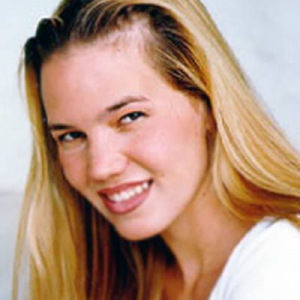
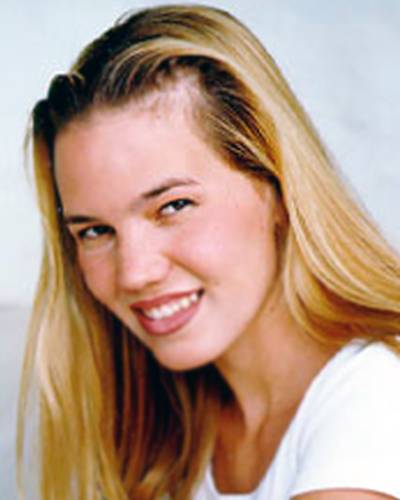
CA KRISTIN SMART: Missing from San Luis Obispo, CA - 25 May 1996 - Age 19 *PAUL FLORES GUILTY* (2 Viewers)

1580612677226.png

Kristin was last seen on May 25, 1996. Her nickname is Roxy. FOUL PLAY IS SUSPECTED.
- - - - - - - - - - - - - - - - - -
Smart was a freshman architecture major at California Polytechnic State University (Cal Poly) in San Luis Obispo, California in 1996. She departed from an off-campus party and headed for her dormitory at approximately 1:30 and 2:00 a.m. on May 25, 1996. At the party, Smart was acting as if she was intoxicated or under the influence of drugs. When she left the gathering, she was having trouble walking.

Smart was accompanied by a female acquaintance and another student from the university, Paul R. Flores, when she left the party. Her friend separated from Smart and Flores at the intersection of Perimeter Road and Grand Avenue on the college campus.

Flores allegedly told Smart's friend that he would see Smart to her home. She was last seen walking north on Grand Avenue with Flores, towards Muir Hall, her dormitory. Smart has never been heard from again. She was not carrying any identification, cash or personal belongings at the time she vanished.

NCMEC - NamUs - Doe Network -

 
Last edited by a moderator:
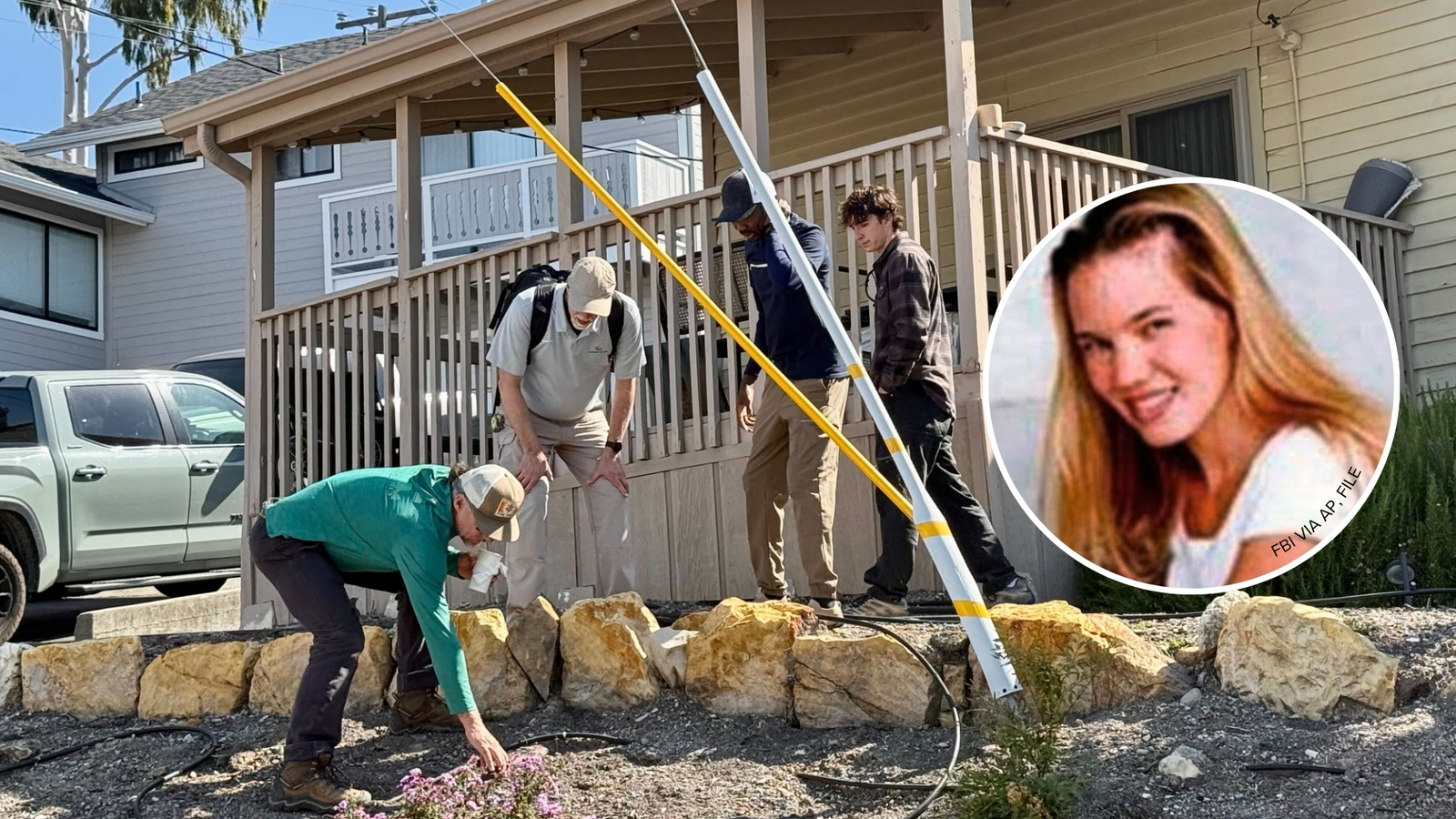
Investigators searching the Arroyo Grande home of convicted killer Paul Flores’ mother in the Kristin Smart case have uncovered “positive results” from soil testing that authorities say are “consistent with human remains presence,” San Luis Obispo County officials confirmed.
The revelation came during a Friday morning news conference in which SLO County Sheriff Ian Parkinson discussed the active search warrant operation at the home tied to Susan Flores in the 500 block of East Branch Street.
When asked whether investigators were receiving results “consistent with human remains presence,” Parkinson responded: “Correct.”
“I would say yes, they’re fruitful, yes, that they’re we’re getting some positive results,” the sheriff also said of the testing.
Still, Parkinson emphasized that investigators have not found Smart or her remains. <snip>
Prosecutors argued that Smart's remains were buried on Ruben Flores' property and later moved. <snip>

 
Kristin Smart search reveals ‘very strong’ evidence of human remains. What’s next?
Scientists who spent last week taking soil samples from an Arroyo Grande yard as part of the ongoing Kristin Smart investigation said results indicating evidence of decomposing human remains were “very strong” in one specific area of the property.


“We did not recover Kristin Smart,” the agency said in a news release that afternoon.

Sheriff Ian Parkinson had previously said investigators found evidence of human remains during a press conference Friday.

However, that evidence was not as conclusive as bones or body parts. Rather, it was a specific array of gas compounds found in the soil that are consistent with the process of human decomposition.

Environmental chemist Steve Hoyt is part of a team of scientists who conduct “vapor intrusion testing,” a relatively new method that tests for gas molecules in soil known as “volatile organic compounds” that are emitted from the natural decomposition process of living organisms — including human bodies.

This week’s search was not the first time the team — also including environmental engineer Timothy Nelligan, his son Jacob Nelligan, former FBI chemist Brian Eckenrode and George Mason University postdoctoral forensic science research fellow Edward Bentil — has tested the area. They previously tested the soil in the neighboring property near the fence with Susan Flores’ house in December 2020, August 2021 and March 2023, which at the time showed positive but inconclusive results for evidence of human remains.

However, the science has only gotten better since then, Hoyt said.

Now, the scientists can show with a greater accuracy that the gas compounds they are looking at are — or were — from a human body instead of a dead animal or another decomposition process.

“We’re finding organic compounds that are characteristic of decomposing bodies, not any specific body,” Hoyt told The Tribune on Monday. “We’ve narrowed it down enough that we believe that there’s a very, very high probability we’re looking at the decomposition of human bodies.”

Hoyt said the team has a forthcoming study currently under peer-review that demonstrates the improved accuracy of the testing.

This time, their testing showed “very strong” evidence of human remains compounds in the soil in a narrow walkway on the west side of Flores’ house, between the two properties, he said.

The new results allow the team to extend the plume they previously mapped from the neighboring yard across the walkway to underneath Susan Flores’ home, he said. On Saturday, a forensic investigator in a head-to-toe suit, surgical gloves and a headlamp was working in the crawlspace under the house with a gardening trowel, apparently collecting evidence in buckets.

The walkway is an area of the property that has been of high interest among those who have followed case over the years, largely due to early reports from a previous tenant of Susan Flores’, Mary Lassiter, who said she could hear what sounded like a beeping watch every morning at 4:20 a.m. outside her bedroom window when she rented the house in October 1996 until she moved out in March 1997.

The area also had not previously been looked at, let alone excavated, according to Chris Lambert, the host of the “Your Own Backyard” podcast about the Smart case.

“This side yard, to my knowledge, was not able to be searched with ground-penetrating radar in previous searches because it was too narrow for the machines,” he told The Tribune on Monday.
 
Kristin Smart search reveals ‘very strong’ evidence of human remains. What’s next?
Scientists who spent last week taking soil samples from an Arroyo Grande yard as part of the ongoing Kristin Smart investigation said results indicating evidence of decomposing human remains were “very strong” in one specific area of the property.


“We did not recover Kristin Smart,” the agency said in a news release that afternoon.

Sheriff Ian Parkinson had previously said investigators found evidence of human remains during a press conference Friday.

However, that evidence was not as conclusive as bones or body parts. Rather, it was a specific array of gas compounds found in the soil that are consistent with the process of human decomposition.

Environmental chemist Steve Hoyt is part of a team of scientists who conduct “vapor intrusion testing,” a relatively new method that tests for gas molecules in soil known as “volatile organic compounds” that are emitted from the natural decomposition process of living organisms — including human bodies.

This week’s search was not the first time the team — also including environmental engineer Timothy Nelligan, his son Jacob Nelligan, former FBI chemist Brian Eckenrode and George Mason University postdoctoral forensic science research fellow Edward Bentil — has tested the area. They previously tested the soil in the neighboring property near the fence with Susan Flores’ house in December 2020, August 2021 and March 2023, which at the time showed positive but inconclusive results for evidence of human remains.

However, the science has only gotten better since then, Hoyt said.

Now, the scientists can show with a greater accuracy that the gas compounds they are looking at are — or were — from a human body instead of a dead animal or another decomposition process.

“We’re finding organic compounds that are characteristic of decomposing bodies, not any specific body,” Hoyt told The Tribune on Monday. “We’ve narrowed it down enough that we believe that there’s a very, very high probability we’re looking at the decomposition of human bodies.”

Hoyt said the team has a forthcoming study currently under peer-review that demonstrates the improved accuracy of the testing.

This time, their testing showed “very strong” evidence of human remains compounds in the soil in a narrow walkway on the west side of Flores’ house, between the two properties, he said.

The new results allow the team to extend the plume they previously mapped from the neighboring yard across the walkway to underneath Susan Flores’ home, he said. On Saturday, a forensic investigator in a head-to-toe suit, surgical gloves and a headlamp was working in the crawlspace under the house with a gardening trowel, apparently collecting evidence in buckets.

The walkway is an area of the property that has been of high interest among those who have followed case over the years, largely due to early reports from a previous tenant of Susan Flores’, Mary Lassiter, who said she could hear what sounded like a beeping watch every morning at 4:20 a.m. outside her bedroom window when she rented the house in October 1996 until she moved out in March 1997.

The area also had not previously been looked at, let alone excavated, according to Chris Lambert, the host of the “Your Own Backyard” podcast about the Smart case.

“This side yard, to my knowledge, was not able to be searched with ground-penetrating radar in previous searches because it was too narrow for the machines,” he told The Tribune on Monday.

It kinda sounds like junk science.
 
That's what they all said about dna at the beginning.

Those same scents are what cadaver dog's are trained to find so not sure why you think that.

They found decomp in two places in the same area, but no body.

I shouldn't have said junk science. However, it appears they don't know to use the device correctly.
 
Especially if she was dismembered

I just find it hard to believe that they buried her and then dug her up and buried her again a few feet away.

If they dismembered her. Then they buried pieces and then returned to dig up each part and move somewhere else.

If I were a juror, I'd just ignore that as reliable. Show me body parts buried there, not just gasses of decomposition
 

Users who are viewing this thread

Forum statistics

Threads
3,266
Messages
296,659
Members
1,097
Latest member
IBC220
Back
Top Bottom