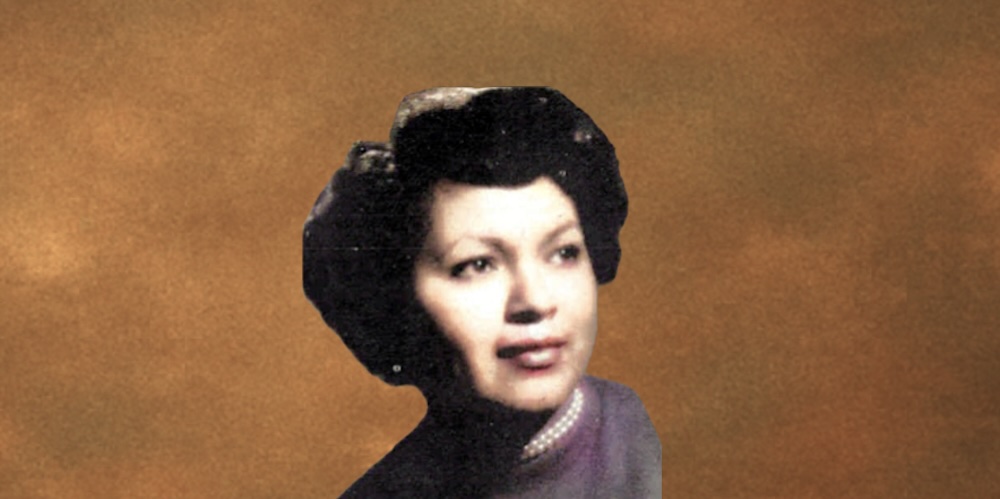
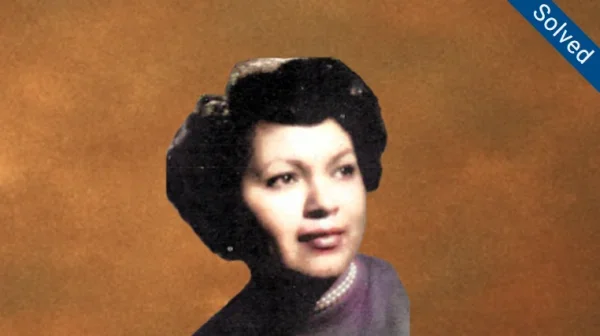
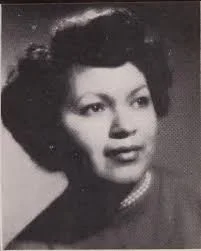
After graduating from Wapato High School in 1955, Martha Bassett sought more education. She attended Yakima Business College and studied English, shorthand, typing, office practice and penmanship.
She used those skills working as a teletype operator for the Western Union Telegraph Company in Chicago, a role she held for more than a decade. Bassett, a citizen of the Yakama Nation, had moved to Chicago in 1957 through the
Bureau of Indian Affairs Relocation Program, a federal initiative established under the Indian Relocation Act of 1956.
Bassett was 32 years old when she was found murdered on Sept. 30, 1968 in Wilmington, Ill., southwest of Chicago. Her identity was unknown until recently
confirmed with DNA samples from family members after the
Will County Coroner's Office reopened her cold case in late 2024.
On Wednesday, Bassett came home.
Relatives had traveled to the Chicago area on Monday to meet with coroner's office authorities and others who worked to identify Bassett. Her remains were flown Wednesday from Midway International Airport in Chicago to Sea-Tac, then transported to Valley Hills Funeral Home in Wapato. Her family members also flew home Wednesday.
Bassett was taken Thursday morning from Valley Hills to the Toppenish Creek Longhouse south of White Swan. After traditional evening services and a meal, Bassett was buried Friday morning at the Union Gap cemetery.
Asa Washines was among family members who traveled to Chicago. In a social media post earlier this week, he encouraged others to come to the longhouse for the proper services Bassett didn't receive 56 years ago, and thanked people for their support and prayers.
Sports fan, avid reader
Bassett was born on Jan. 3, 1936, in Wapato to John and Ida (Haney) Bassett, according to the obituary from
Reeves, Fruland and Baskerville Funeral Homes and Crematory in Illinois. She grew up on the Yakama Reservation and as a Yakama Nation citizen had lineage to the Wanapum and Rock Creek tribes.
While attending Wapato High, Bassett was a member of the Girls' Athletic Club, according to a school yearbook. Members participated in softball, tumbling, ping-pong, badminton, basketball and volleyball, with the goal of earning enough points to win a letter. Bassett also was in the school chorus and was a member of the Girls' Club, according to the 1955 school yearbook.
She enjoyed photography, was a skilled seamstress and was an avid reader, according to her obituary.
After attending the business college in Yakima, Bassett moved to the Chicago area in 1957 as part of the Bureau of Indian Affairs' voluntary urban relocation program, her obituary said. The federal initiative sought to encourage Indigenous people to move from reservations to urban centers such as Chicago, Denver, Los Angeles, Cleveland and Seattle, according to information on
the National Archives website.
In 1953, new federal policies toward Native Americans called termination eliminated much government support for Native tribes, according to the National Archives. The voluntary urban relocation program was the BIA's response to the policy of termination. BIA officials actively recruited Indigenous people to move to urban centers, touting "good jobs," training and "happy homes" in encouraging people to move to Denver.
"The chance of your lifetime!" one brochure read.
Numerous Native Americans moved to cities. But many struggled to adjust to life in a metropolis and faced unemployment, low-end jobs, discrimination, homesickness and the loss the traditional cultural supports, according to the National Archives information.
Bassett kept in touch with her family. But by 1967, relatives had lost contact with her, the Will County Coroner's Office said in the late July news release
announcing her identity. Concerned for her welfare, relatives traveled to Chicago "in a determined effort to find her. Unfortunately their exhaustive search was unsuccessful, and the family returned home without answers," the release said.
Among more than 100 pages of archival documents related to Bassett's case are two letters from BIA officials. Bassett's family had reported her missing to the BIA and officials with the BIA's Branch of Employment Assistance then contacted the Chicago Police Department.
"Called Chicago Police Department and explained situation about Martha," states a BIA Branch of Employment Assistance report dated Aug. 7, 1968. "They sent a patrol car to office and after discussing with officers, they were dubious as to whether Missing Persons would handle case.
"Adult, 32 years old, needs no authority to go wherever they want etc.," the report said. "Gave all information available and they will turn over to Missing Persons and should they locate her, contact us."
In a report to the Yakama Agency superintendent dated Aug. 28, field employment assistance officer Marjorie Lee said "our efforts to locate Martha Bassett have been fruitless."
The missing persons bureau of the Chicago Police Department hadn't located her, Lee wrote. Her personal possessions were being held at the Sheridan Plaza Hotel, where she had been living, but the hotel manager hadn't heard from her since late July, she wrote.
"Hospitals and other Agencies that have frequent contact with Indian people have no information concerning her," Lee noted. BIA officials created missing person posters for Bassett.
On Sept. 30, 1968, a highway department worker discovered a woman's remains in brush near the intersection of Interstate 55 and Blodgett Road in Will County, Illinois. She had been strangled and had suffered blunt force trauma to her head. Authorities estimated she was killed approximately 48 hours before she was found. Sept. 28, 1968, is the date of death
in Bassett's obituary.
No identification, clothing or jewelry were found on or near the woman's remains. "The lack of leads, limited means of communication between jurisdictions, and absence of technological tools like DNA testing kept the identity of the victim a mystery," the Will County news release said.
Despite their efforts, authorities couldn't identify her. She was buried in Oakwood Cemetery in Wilmington, Ill.
Persistence gives hope
Bassett's relatives are grateful that their loved one has her name back. They appreciate the perseverance of investigators and advances in forensic science, and those who traveled to the Chicago area personally thanked members of the Will County Coroner’s cold case unit.
In 2009, the coroner's office established a cold case unit and exhumed her remains from Oakwood Cemetery after advances in forensic science. Analyses conducted at the University of North Texas, the Smithsonian Institution and the University of Illinois Forensic Anthropology Department suggested her ancestry was Native American, according to Bassett's obituary.
"This important detail allowed investigators to reach out to tribal communities across the Midwest, keeping her case active for years," her obituary said.
In 2024, with assistance from forensic genetic genealogy company Othram Inc.,
new DNA sequencing techniques identified her as Martha Bassett. "Through the cooperation of family members, Native communities and investigative teams, her identity was finally confirmed after decades of uncertainty," the obituary said.
As DNA technology and forensic genetic genealogy continue to advance, more unidentified human remains are being identified and returning to their loved ones for burial near family, where they grew up and lived. Such breakthroughs are bringing hope to some whose loved ones are still missing.
The journey to bring Bassett home included a meal in Chicago with the Native community, prayers, songs and smudging. Relatives Emily Washines and HollyAnna DeCoteau Littlebull joined Asa Washines in traveling to Chicago.
Asa Washines said they visited the Will County Coroner's office, the funeral home and the site she was found. The group also traveled to her apartment in uptown.
The BIA assisted with costs of transporting Bassett home, relatives said.
Members of two chapters of the Savagez Motorcycle Club escorted Bassett and relatives from Sea-Tac to Wapato. George Lee Jr., spiritual leader of the Toppenish Creek Longhouse, joined them. He had connected with the motorcycle club earlier and thanked them for the escort.
'Stuck in limbo'
Bassett's identification and return to her Yakama homelands has brought a complex mix of emotions for Lee. His mother,
Sandra Lee Smiscon, was shot to death in Seattle on July 12, 2003. No one was arrested, but Seattle police have been working with George Lee Jr. in recent years for closer attention to the case.
And Lee's cousin,
Alillia 'Lala' Minthorn, was killed in May 2019. Federal prosecutors said her convicted killer, Jordan Everett Stevens, shot her because she spoke to FBI agents investigating a crime Stevens was involved in near Toppenish. He killed her even though Minthorn did not have information to give investigators, prosecutors said.
"I had the opportunity to look her killer in the eye at his sentencing. Just to have that closure, to look that person in the eye, it does bring a lot," said Lee. "It does bring a lot ... of comfort, to know this is the person who did it, and he won't be doing it anymore.
"With my mother and Martha Bassett, there's no way to look that person in the eye. This is a strange feeling ... obviously it does touch a spot that we will realize is found in every individual who has no answers," he added. "Just stuck in that limbo. We'll still be stuck here ... and that's painful. There's no closure at all."
Other crucial questions remain unanswered in Bassett's case. Her relatives continue to wonder why Chicago Police didn't file Bassett as a missing person "despite requests from the family and Bureau of Indian Affairs in August 1968," Emily Washines said.
Bassett will never be forgotten, Littlebull said. She thanked all who helped and participated in bringing her home.
"Our job's not over. There's still more sisters to bring home," she added.
Services for Martha Bassett
Local arrangements have been made under the direction and care of Reeves, Fruland and Baskerville Funeral Homes and Crematory in Illinois. (815/476-2181)
The family will process from Baskerville Funeral Home, 700 East Kahler Road, to Midway International Airport in Chicago, accompanied by family and representatives from the Will County Coroner’s Office, as we bid her a final farewell and return her to Washington State. After her return to Washington traditional services will be held at the Toppenish Creek Longhouse. She will be laid to rest at Union Gap Cemetery in Yakama County, Washington.
Family and friends are encouraged to log onto
www.BaskervilleFuneral.com to sign the guest book and share Martha’s memorial page online through social media
Her relatives never gave up, and advances in forensic science and the perseverance of investigators finally restored her name.

www.yakimaherald.com
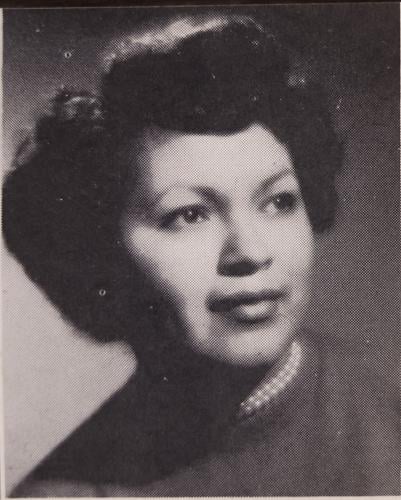
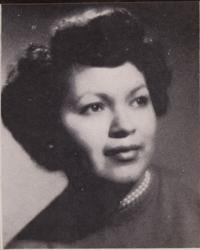
Martha Bassett’s senior photo in the 1955 Wapato High School yearbook.
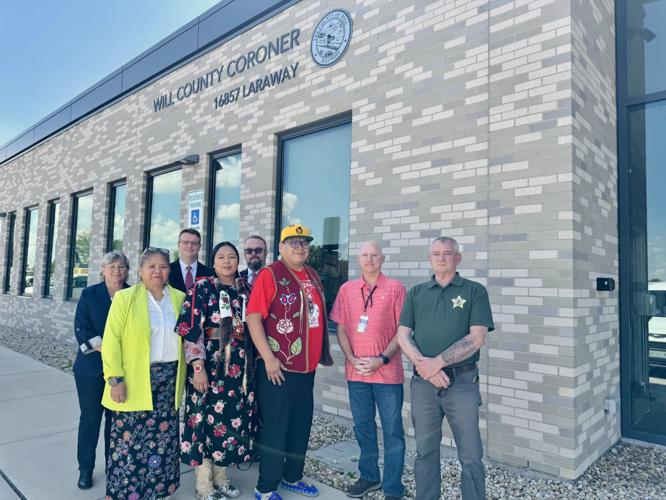
Family members of Martha Bassett traveled to the Chicago area early this week to meet with officials and to help bring her home to the Yakama Reservation. From left, Laurie Summers, Will County coroner; relative HollyAnna DeCoteau Littlebull; Robert Enright, funeral director for Reeves, Fruland & Baskerville Funeral Homes and Crematory of Illinois; relative Emily Washines; relative Asa Washines; Bill Sheehan, Will County deputy coroner/cold case investigator; and Mike VanOver, Will County chief deputy coroner. (courtesy photo)
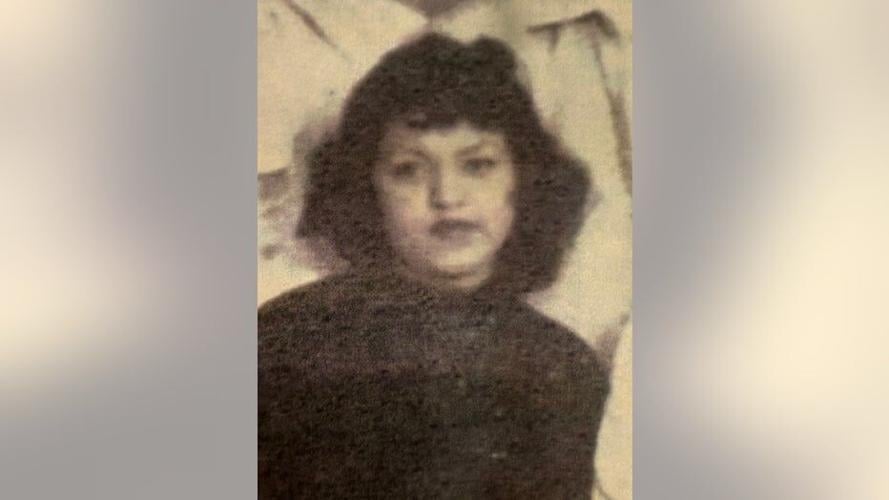
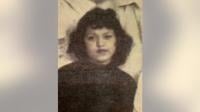
Martha Bassett as a student at Wapato High School.
Her relatives never gave up, and advances in forensic science and the perseverance of investigators finally restored her name.
www.yakimaherald.com



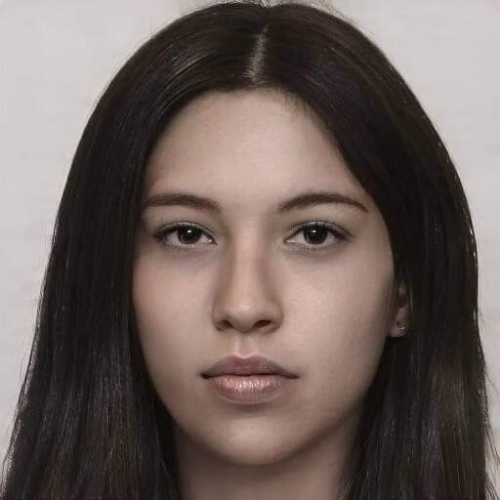
 www.crimewatchers.net