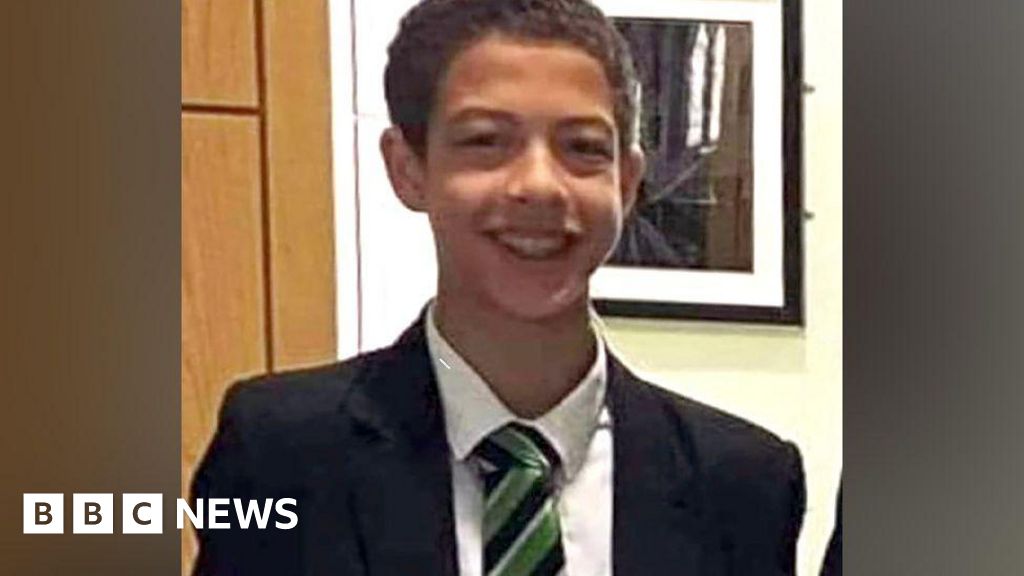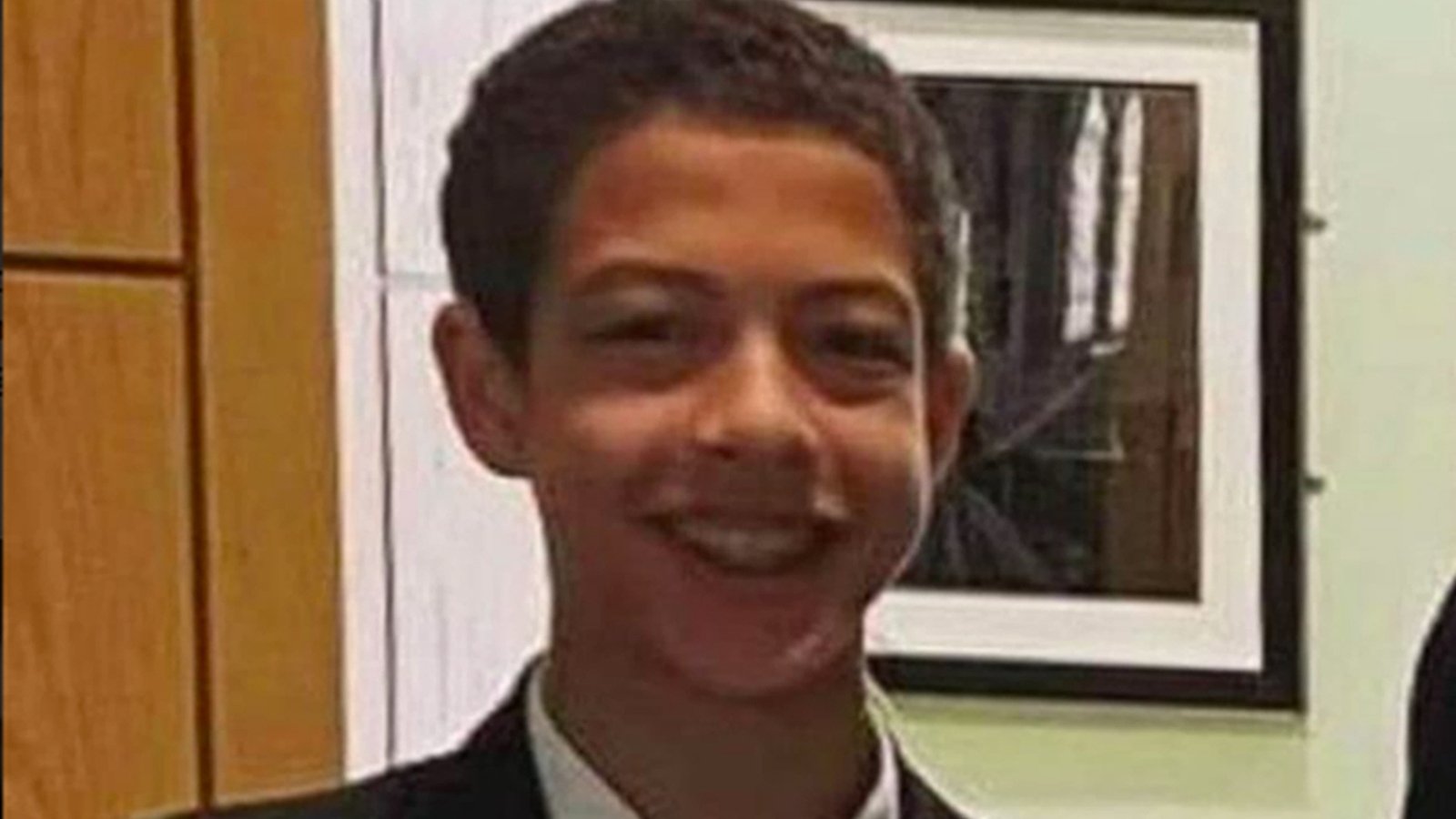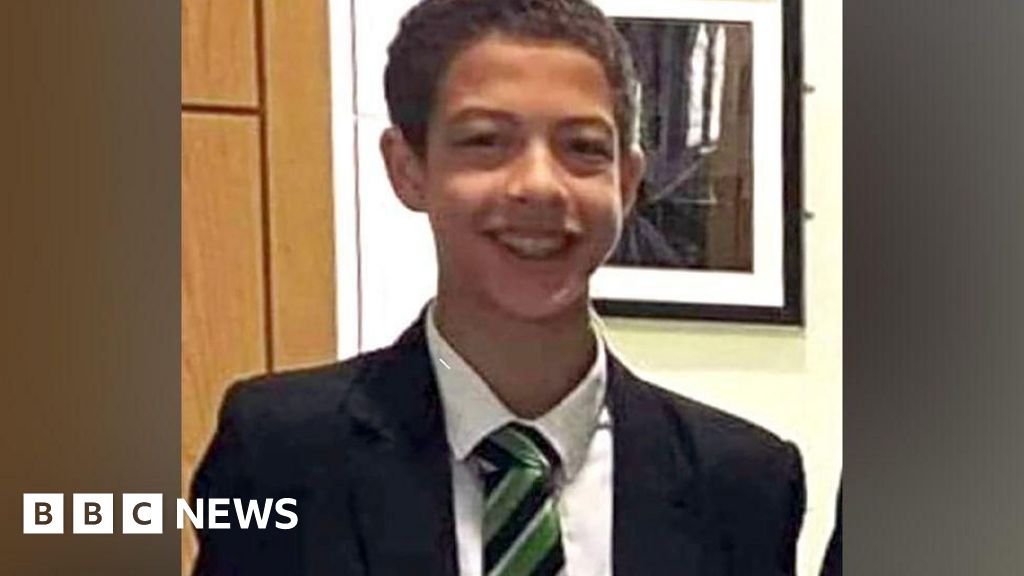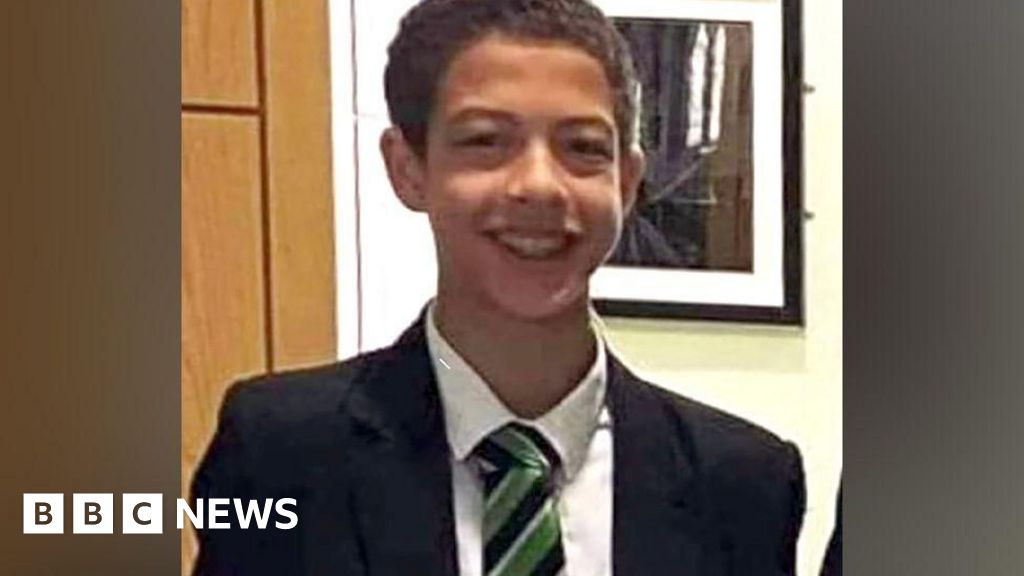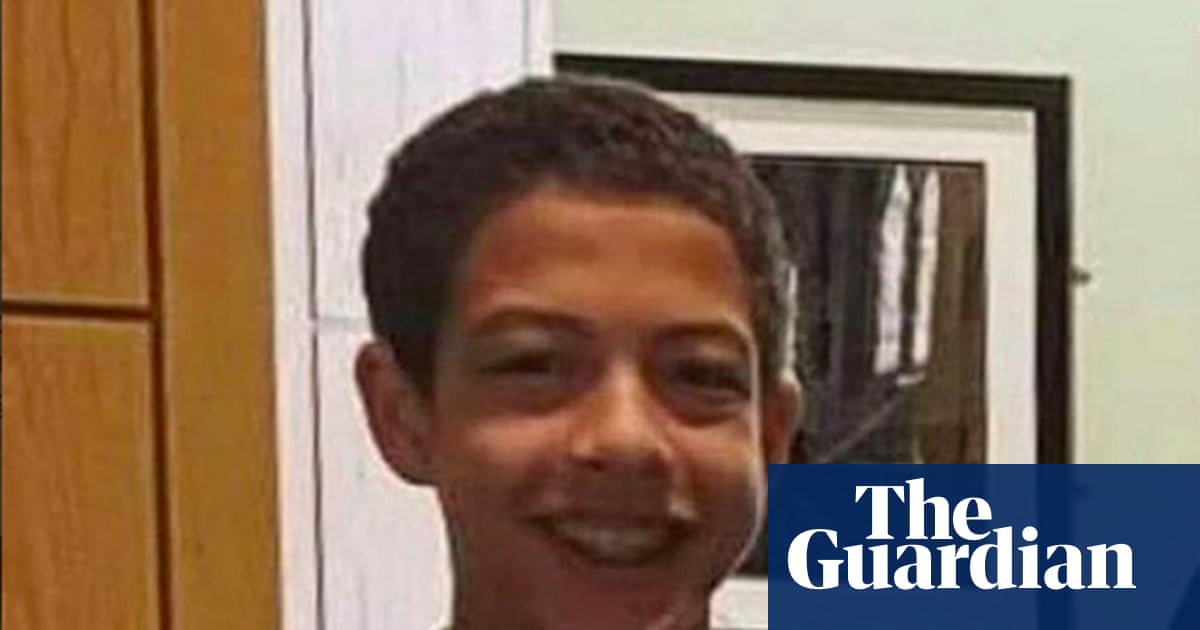
United Kingdom NOAH DONOHOE: Missing from Belfast, Ireland - 21 June 2020 - Age 14 *Found Deceased*

1592955664379.png

Police say missing Noah Donohoe (14) may have head injury after abandoning clothing

It's believed missing Belfast schoolboy Noah Donohoe may have a head injury after falling off his bike and abandoning his clothing, police have said in an urgent appeal.

The 14-year-old left his home in south Belfast on Sunday at around 5.30pm and there have been increasing concerns for his welfare.

Noah left his home on his black Apollo mountain bike wearing a black skateboarding helmet, khaki green North Face jacket, grey sweat shorts with an emblem on one leg, a tie-die blue hoody, Nike trainers with a bright yellow ‘tick’ and carrying a khaki rucksack.

He was seen on Ormeau Avenue at 5.45pm and on Royal Avenue heading towards York Street a short time after.

Noah was then seen on North Queen Street heading towards the Limestone Road at 5.57pm.

Chief Inspector Gavin Kirkpatrick said: "An eyewitness believes they saw a young male matching Noah’s description fall off his bicycle on Sunday evening, possibly sustaining a head injury, in the vicinity of North Queen Street/York Street, but we do not know the specific time.

We believe Noah got back on his bicycle, cycling into Northwood Road where he then abandons all his clothing, as he is seen a short time later cycling while naked. We believe Noah then dropped his bicycle and left the area on foot.

“There have been no further confirmed sightings of Noah since 6.08pm on Sunday."


Media - NOAH DONOHOE: Missing from Belfast, Ireland since 21 June 2020 - Age 14
 
Last edited:

Heartbreaking to consider what Noah experienced, witness tells inquest​

A police officer who searched an underground tunnel for Noah Donohoe became emotional at the inquest on Wednesday when he considered the conditions the schoolboy would have encountered after he disappeared five and a half years ago.


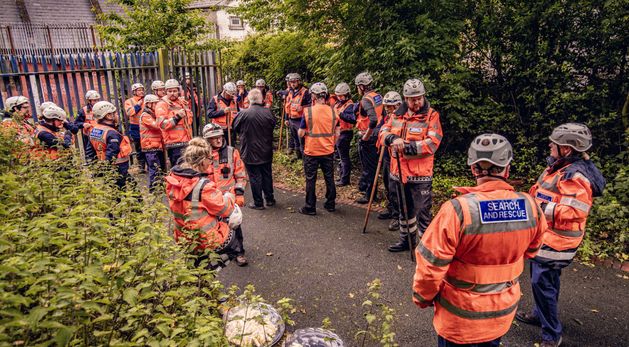
A former PSNI inspector, Philip Menary, was part of a hazardous environment police team involved in the underground search.

Giving evidence at the inquest about the conditions he encountered as he made his way along the tunnel towards a point close to the Seaview football pitch, he said it was "heartbreaking" to consider what Noah experienced.

Menary described the "complete blackness" his team encountered, amid debris including branches and boulders and other obstructions in washing water.

He described how it would be "exhausting" trying to "figure and feel" a way through the tunnel.

He explained how a person could be constantly tripping over debris and obstructions and at times having to go "on all fours" to try to get through the tunnel.

He said it would be "completely disorientating" and someone could stumble and fall with water "continually coming over you".

The former police officer became emotional and paused momentarily at this point as he reflected on "young Noah".

"It's heartbreaking," he said.

He described as "horrendous" the tunnel conditions under the Seaview football pitch, which is downstream from where Noah was seen naked close to the entrance to a storm drain at Linear Park.

Describing the sludge and silt in the tunnel area where Noah's body was eventually found, close to the M2 motorway, he said it "just sucks your feet under" in "absolutely freezing" conditions.

Commenting on a photograph of the tunnel shown to the coroner, Mr Justice Rooney, and the jury, he said it was "completely pitch black".

He said his team experienced "a real sense of sadness" when Noah's body was found because they understood what he had gone through, and they knew "the steps" the schoolboy had taken.
 

Noah Donohoe inquest: Pathologists say schoolboy had ‘no evidence’ of trauma to his brain​

On Wednesday, Dr Marjorie Turner, Dr Nathaniel Cary, and former state pathologist for Northern Ireland, Professor Jack Crane, gave evidence for a second day.

Noah more than likely died within 24 hours of entering the storm drain where he was found dead, expert witnesses told the inquest.

Pathologists find no evidence of 'direct violence' in Noah Donohoe's death​

There was no evidence of "direct violence" from a third party in analysis of Noah Donohoe's body, a group of pathologists have told the inquest into his death.

Three experts, including the pathologist who conducted Noah's post-mortem examination, agreed that his cause of death was likely drowning and evidence suggests he was alive when he encountered water in a storm drain.

Jurors at Belfast Coroner's Court were shown a picture of Noah's body that was not presented in court, as the pathologists discussed a "broad area of bruising" across his forehead.

She said prior to the examination she had been briefed on the time he was last seen, knew he had been seen on CCTV falling off his bike, that he had been discovered face down in a culvert that was around a metre wide and would be varyingly full of tidal water and that hand marks were found on the wall of the culvert in that area.

The post-mortem examination noted Noah weighed 54kg, was of slim build and had short, black curly hair and natural teeth with braces.

His body was naked and coated in a brown "mudlike material" that was patchy on his front but more evenly coated across his back.

Dr Turner reported that almost the entirety of his forehead was covered in red, purple bruising, implying "significant blunt impact" and signs of bruising were present in areas across his arms and legs, as well as some abrasions ingrained with dirt.

There were no identified injuries to his back but the mud was "very adhered to skin" and there were no identified injuries to the genital area.

There was a "large body of fresh fluid" in the stomach consistent with him having swallowed a lot of water prior to death.

Dr Turner found "nothing to suggest involvement of another individual", no bleeding on the brain externally or on incision that would imply a serious injury and a drug test was negative.
 

Noah Donohoe inquest: Pathologists say schoolboy had ‘no evidence’ of trauma to his brain​

On Wednesday, Dr Marjorie Turner, Dr Nathaniel Cary, and former state pathologist for Northern Ireland, Professor Jack Crane, gave evidence for a second day.

Noah more than likely died within 24 hours of entering the storm drain where he was found dead, expert witnesses told the inquest.

Pathologists find no evidence of 'direct violence' in Noah Donohoe's death​

There was no evidence of "direct violence" from a third party in analysis of Noah Donohoe's body, a group of pathologists have told the inquest into his death.

Three experts, including the pathologist who conducted Noah's post-mortem examination, agreed that his cause of death was likely drowning and evidence suggests he was alive when he encountered water in a storm drain.

Jurors at Belfast Coroner's Court were shown a picture of Noah's body that was not presented in court, as the pathologists discussed a "broad area of bruising" across his forehead.

She said prior to the examination she had been briefed on the time he was last seen, knew he had been seen on CCTV falling off his bike, that he had been discovered face down in a culvert that was around a metre wide and would be varyingly full of tidal water and that hand marks were found on the wall of the culvert in that area.

The post-mortem examination noted Noah weighed 54kg, was of slim build and had short, black curly hair and natural teeth with braces.

His body was naked and coated in a brown "mudlike material" that was patchy on his front but more evenly coated across his back.

Dr Turner reported that almost the entirety of his forehead was covered in red, purple bruising, implying "significant blunt impact" and signs of bruising were present in areas across his arms and legs, as well as some abrasions ingrained with dirt.

There were no identified injuries to his back but the mud was "very adhered to skin" and there were no identified injuries to the genital area.

There was a "large body of fresh fluid" in the stomach consistent with him having swallowed a lot of water prior to death.

Dr Turner found "nothing to suggest involvement of another individual", no bleeding on the brain externally or on incision that would imply a serious injury and a drug test was negative.
Huh?. I can't see any other reason for his behavior.
 
Not all head injuries / concussions will leave evidence of such. Only if it was bad enough to cause a brain bleed.
It’s very possible (likely imo) that yes, he hit his head and had „brain trauma“, just not visible on autopsy.
Yeah. I've had stitches and staples many times from sleepwalking. But amazingly I never had a head injury. Not even a concussion. I woke up with buzxing in my ears a couple times.This boy had to have head trauma. I can't believe he didn't show signs of bleeding.
 

No traces of drugs found in Noah Donohoe's body​

Toxicology experts have told an inquest that no traces of drugs were found in samples taken from Noah Donohoe's body.

However, the inquest has also heard that the possibility of drugs having been in the schoolboy's body "cannot be completely excluded".

The hearing was told that any "unstable" drugs in a body can degrade before post-mortem samples are analysed.

The inquest into the schoolboy's death has been hearing evidence from Amy Quinn, a forensic scientist at Forensic Science Northern Ireland, and Dr Simon Elliott who is an England-based toxicology consultant.

The witnesses explained how blood and urine samples were analysed for both drugs and alcohol following the schoolboy's disappearance and death in June 2020.

Both experts agreed that the results of the tests showed that Noah was not under the influence of alcohol at the time of his death.

The tests also recorded that there was no presence of drugs recorded in the samples taken from Noah's body.
 

‘Likely’ that Noah Donohoe was alive when he entered storm drain, inquest told​

An expert witness has told the inquest into Noah Donohoe's death that it is "likely" that Noah was alive when he entered a storm drain in north Belfast, where he was later found dead.


A post-mortem examination found the cause of death was likely to be drowning.

The inquest into his death, which is being heard with a jury, resumed following the Easter break on Monday.

The proceedings at Belfast Coroner’s Court heard a report by Professor Carolyn Roberts, who had been commissioned by the Coroner’s Service, and had visited the site as well as considering “extensive material”.

In her report, which was read to the inquest, she found that Noah was likely to have climbed through the bars into the storm drain before drowning.

“The bars of the grille are sufficiently widely spaced that a large child or even a small man could deliberately climb through without undue effort,” her report found.

“In my opinion, it is hence likely that the boy climbed into (the) culvert entrance alive, slipping between the vertical metal bars of the metal grille.”

Prof Roberts found Noah was likely to have walked while crouched in the tunnel, and with rising water levels and low light, may have become disoriented.

“The layout is relatively complex, and for an unfamiliar person moving in semi-darkness, in my opinion, it would appear possible to become disoriented. This is the section from which Noah’s body was recovered,” her report went on.

Her report also found that high tide was likely to have happened between 11.30pm and midnight on June 21 2020.

“This is some five or six hours after his (Noah’s) last sighting, which would allow ample time for him to have made his way several hundred metres along the culvert,” her report found.

“At this point, water is likely to have risen almost completely to fill the culvert around and immediately above the point at which the boy’s body was discovered, creating conditions for drowning.

“The quadrant would fill with water relatively quickly, and in darkness, with a complex network of pipes and cold conditions, the boy would be likely to have become confused, in my opinion.
 

All evidence heard in inquest into death of Noah Donohoe​

The jury at the Noah Donohoe inquest has now heard all the evidence in the case.

The schoolboy disappeared and died in north Belfast six years ago and the inquest into his death opened almost five months ago.

Some unspecified legal issues are now under consideration at the inquest, and these matters must be resolved before the hearing can move towards a conclusion.

The coroner, Mr Justice Rooney, said on Monday: "We literally are in the final stages".

The final evidence in the case was presented to the jury by way of written statements during a brief sitting of the inquest on Monday morning.
 

Jury in Noah Donohoe inquest told to reach verdict solely on evidence​

The jury at the inquest into the death of Noah Donohoe have been told to reach their findings based on the evidence they have heard in court.

Coroner Mr Justice Kevin Rooney started his charge to the jury of eight men and two women on the 21st week of the inquest, which started in January.

The jury is charged with reaching findings including how Noah came by his death.


He also reminded the jury the process was a fact-finding inquiry into how Noah died, and not a criminal trial where someone is found guilty of an offence or found liable to pay damages, and not about finding fault, attributing blame or apportioning guilt.

"Your findings must be based solely on the evidence that you have heard or have seen in this court, you must ignore everything else other than this evidence. It is irrelevant," he said.

"We are here because this inquest is required by law. You must not suppose that this automatically means that something went wrong that contributed to Noah's death, you must not lose focus on the question we are here to consider, that is how Noah came by his death."
 
The Noah Donohoe inquest was adjourned late on Thursday night after three days of jury deliberations.

Announcing the decision just before 1am after a 14-hour day in court, the coroner described it as an “unprecedented” situation.


“It is unprecedented to allow a jury to remain in deliberation for such a long period of time,” the coroner said.

However, he added that it was the best option to allow all members of the jury to take part in the deliberations for the inquest to reach a conclusion.

He also said that he didn’t want the inquest to be rushed into a decision because of the time constraints they faced.

Mr Justice Rooney asked that they provide their dates of availability in order to determine a date for the proceedings to reconvene and deliberations to continue.

He indicated that this could be August or September, depending on when they are all able to come back.

A spokesperson for the Lady Chief Justice’s Office said: “The Noah Donohoe inquest was adjourned in the early hours of Friday morning after the jury did not give a verdict in writing.

“As a number of jurors will now be unavailable, the inquest has been adjourned with a further date to be set for its continuation.”
 

Jury deliberations in long-running Noah Donohoe inquest to resume next month​

Jury deliberations in the long-running inquest into the death of Belfast schoolboy Noah Donohoe are set to resume next month.

Proceedings were adjourned at the start of July after jurors had deliberated for 24 hours over three days and were unable to reach an unanimous verdict.


The inquest into his death started in January and has heard evidence from 76 witnesses and statements from a further 42 people, and involved maps, video footage, photographs, police logs and expert reports.

Noah’s mother, Fiona, has been present for every day of the inquest.

Jurors have been tasked with agreeing findings on 10 questions, including the date of Noah’s death and whether any errors made by police contributed to his death.

Mr Justice Rooney adjourned the inquest following a late night sitting that ran into the early hours of July 3 after it emerged that a number of members of the jury would not be available to continue the deliberations.

He described an “unprecedented” situation, adding they had “run out of time” and would resume later in the year when all of the jurors were available again.

A review hearing, of which the details cannot be reported, was held on Friday morning.

Jurors are expected to return to resume deliberations on a date in mid September.
 

Mum's tribute to 'greatest gift' but says PSNI and Department failed Noah​

Noah Donohoe's mum has hit out at the Department for Infrastructure and the PSNI as his long-running inquest found failings over access to a water culvert and in the investigation into his death.

Failings by the Stormont department around its management of access to a water culvert in north Belfast possibly contributed to the death of schoolboy Noah in June 2020.

The jury also found there were no police failings that may have contributed to his death after unanimously agreeing that he died before he was reported missing, however jurors identified a series of subsequent investigative errors by officers that impacted on the ability of the jury to reach conclusions on aspects of the inquest.

The jury at the inquest into the death reached a unanimous decision on its findings.

Outside Belfast Coroner's Court, mum Fiona paid tribute to "the greatest gift of my life" as she reacted to the jury's unanimous findings after five days of deliberations.

In a statement read by her solicitor, Niall Murphy, she added: “I miss him every day. He should still be here with me, following his dreams and planning for his future. I came to this inquest seeking answers, and I leave it with one clear answer: Noah was failed.

“He was failed by the Department for Infrastructure, who left a deadly storm drain unsecured and accessible to children.

“He was failed by the PSNI, who, from the moment I reported him missing, repeatedly failed to investigate and, from the moment he was found, stopped looking for answers.

“Instead, to deflect from their own failings, the Department for Infrastructure and police have sought to blame Noah.

“This inquest has exposed a culture of institutional defensiveness that goes to the heart of these public bodies, coupled with a reckless disinterest in investigating what happened to my son.

“I will never understand why and can never accept that Noah’s death did not merit a full and fearless investigation. Answers of ‘I don’t know’ and ‘I can’t recall’ permeated the evidence heard at this inquest.

“It’s easy to say you don’t know when you failed to find out. It’s easy to say you can’t recall when you haven’t secured and preserved the evidence capable of providing answers.

“The jury’s verdict lays bare that the evidence they have heard reveals an inventory of clear and repeated failings on the part of the PSNI and the Department for Infrastructure. Noah deserved better.

“I would like to express my thanks to the jury for the commitment and dedication they have shown, and to the coroner Mr Justice Rooney for his compassion on some of the most difficult days.

“Thank you also to Noah’s band of brothers, particularly his best friends, Jay (Tierney) and Charlie (Rocks). Noah would be so proud of them for showing up for him (as witnesses at the inquest) and for reminding everyone of the funny, ambitious, loyal and positive boy that Noah was.

“I always told Noah I would fight his corner if he ever needed me to. Luckily, I have not been alone in this fight, and I am so grateful to my family, and to Noah’s army, who have stood in Noah’s corner alongside me in their thousands from day one. They carry Noah’s legacy with them.”
 

Belfast teenager whose body was found in storm drain ‘failed by the PSNI’​

An inquest into the death of a teenager whose body was found in a Belfast storm drain has found there is not enough evidence to explain the puzzling circumstances of how he died, partly because of mistakes by police investigators.

A jury at Belfast coroners’ court found no failings by the Police Service of Northern Ireland (PSNI) that might have contributed to the teenager’s death. However, they identified a series of 13 failures by investigators that they said had affected their ability to reach conclusions on its circumstances.

These included a failure to secure some CCTV evidence, to follow up leads relating to Noah’s green coat, which has never been recovered, and to take relevant statements in a reasonable timeframe. Jurors said the overall house-to-house search strategy for Noah was “poorly” executed, managed and recorded. They found that some statements were not taken within a reasonable timeframe and the quality of entries in police notebooks was poor. In addition, there had been delays in identifying and searching the storm drain.

The inquest found it was possible, but not probable, that mistakes in the management of the storm drain by the Northern Ireland assembly’s Department for Infrastructure had contributed to Noah’s death. No warning signs were erected at the location and it was closed off only by a debris screen that did not prevent access.


DCI Tom Phillips, giving evidence in June, apologised to Fiona Donohoe and admitted that the PSNI missed opportunities to establish where Noah had gone when he was later found to have left home at 3.30am on the night before his disappearance, returning 30 minutes later without his flip-flops and earphones.

Phillips acknowledged that Noah’s mother had to “force” a full investigation into his death, saying: “I am very sorry she had to do that.”
 

Forum statistics

Threads
3,306
Messages
301,754
Members
1,120
Latest member
MadelineOh
Back
Top Bottom