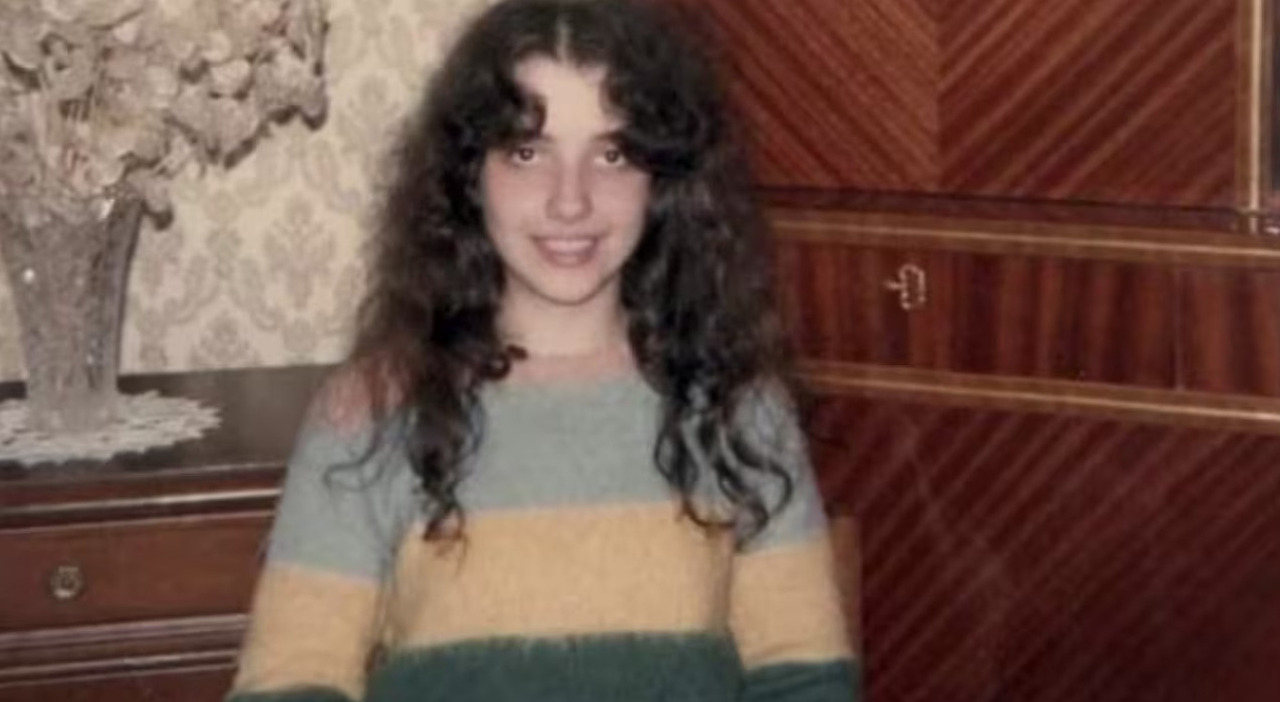
42 years after the disappearance of Mirella Gregori, a new memoir has emerged that could shed light on one of the darkest unresolved cases in Italian news. The document, handed over to investigators,...

www.ilmessaggero.it
The Enigma of Mirella Gregori
A new memoir could shed light on the dark, unresolved case of Mirella Gregori's disappearance 42 years ago.
42 years after the disappearance of Mirella Gregori, a new memoir has emerged that could shed light on one of the darkest unresolved cases in Italian news. The document, handed over to investigators, contains the words of a witness who reconstructs the last moments before the Roman teenager's disappearance.
Today, new details emerge through a memoir written by Marco Fassoni Accetti, a former photographer and film author who, in 2013, confessed to being involved not only in Mirella's disappearance but also in that of Emanuela Orlandi. In the document given to investigators, Accetti claims to have been in direct contact with Mirella Gregori on the day of her disappearance. "I called her on the intercom and spoke with her sister and the lawyer," the man states, referring to an episode that, if confirmed, could be a crucial piece in reconstructing the events of that day. According to the memoir, Mirella came down to meet him. A statement that sheds new light on that phone call, which until now had remained shrouded in mystery. Maria Antonietta Gregori, Mirella's sister, has always remembered answering that intercom herself, but Accetti's words seem to add a new detail: "I called her on the intercom. I spoke first with her sister and then with the lawyer. Mirella was at home and would leave shortly after."
"I face this new anniversary, like every year, with anticipation and my thoughts always on her," says Maria Antonietta Gregori, sister of Mirella, the 15-year-old girl who disappeared without a trace on May 7, 1983, in Rome, waiting for truth and justice for 42 years. That day, the 15-year-old student, after returning home from school, spoke with someone on the intercom, then in the early afternoon, she said goodbye to her mother and left home, never to return. "The thought goes to her throughout the year, but the day of the anniversary is even stronger," Maria Antonietta Gregori emphasizes to Adnkronos, placing all her trust in the work of the Commission of Inquiry into Mirella's and Emanuela Orlandi's disappearance, hoping it can lead to a breakthrough also on the judicial level: "If the Commission finds insights or elements that could reopen the case, the prosecutor would be obliged to do so," she emphasizes. "I have expectations from the end of the Commission's work," continues Mirella's sister, who does not lose hope of "knowing the truth about what happened." "It is positive that the Commission of Inquiry is working by dividing the two cases" of Mirella and Emanuela, Maria Antonietta points out, according to whom the fact that the two girls' stories have been linked "was partly a good thing and partly not; maybe the focus on my sister's fate was lost." For Maria Antonietta Gregori, it is "50% possible" that the stories are connected: "Sometimes I think yes because there are details that make it seem so - she emphasizes - other times I think more of something that ended badly on the very day of my sister's disappearance... before, we didn't talk about femicides like now."
On May 7, Maria Antonietta was at work and only remembers the frantic search for her sister: "My mother raised the alarm because it was unusual for Mirella to disappear for so long." After Mirella's disappearance, the investigations followed numerous leads, many of which turned out to be red herrings or attempts to muddy the waters. At the time, the Gregori family received several anonymous phone calls, some from a man who called himself "the American," an enigmatic character with an English accent who also contacted the Orlandi family. In the memoir, Accetti claims to have been the American, stating that he acted on behalf of a secret organization aimed at destabilizing the Vatican. "It was an orchestrated plan to target some prominent figures within the Holy See," he said. Over the years, the hypothesis of organized crime involvement and connections to the Vatican has been central to the investigations.
Mirella Gregori's disappearance, occurring shortly before Emanuela Orlandi's, has often been linked to the activities of the Banda della Magliana, which at the time controlled part of organized crime in the capital. According to Accetti, both girls were victims of a plan to pressure some figures of power. "We wanted to send a clear signal to those who knew too much," he writes in the memoir. But the references remain vague and lack concrete evidence.
In 2016, journalist Tommaso Nelli brought to light a SISDE note dated October 31, 1983, transcribing a conversation overheard at Bar Italia, run by the De Vito family, a place frequented by Mirella and her friend Sonia. The document reads: "He knew us, unlike us who didn't know him. Just as he took Mirella, he could have taken me too." These words, attributed to Sonia and a nearby perfume shop clerk, suggest that the girl was approached by someone who knew who they were, but they did not know. Accetti, in the memoir, seems to reinforce this hypothesis: "It was not a casual meeting. Mirella was approached by someone who knew exactly who she was and where to find her."
But who is Sonia De Vito? Let's take a step back. The woman is a central figure in the case of Mirella Gregori's disappearance. Mirella's close friend and daughter of the owners of Bar Italia, located below the Gregori family's home on Via Nomentana, Sonia was the last known person to have seen Mirella before her disappearance. According to reconstructions, after receiving a phone call from an alleged former schoolmate, "Alessandro," Mirella left home and went to Bar Italia, where she spoke with Sonia for about fifteen minutes in the bathroom of the venue. Subsequently, Mirella left the bar, and she was never heard from again. Over the years, Sonia De Vito has provided various versions of the facts, some of which contradicted each other. In a conversation reported in a SISDE document, Sonia allegedly confided to another girl: "He knew us, unlike us who didn't know him. Just as he took Mirella, he could have taken me too." These words have fueled suspicions that Sonia might know more about her friend's disappearance.
In 2023, Sonia was finally heard by the bicameral commission of inquiry into the Orlandi-Gregori cases, after more than forty years of silence. During the hearing, she requested that her testimony be kept secret, a decision accepted by the Commission. Mirella's sister, Maria Antonietta Gregori, has repeatedly expressed the belief that Sonia may be aware of important details about her sister's disappearance, stating: "Sonia was her best friend, something must have been said to her, it's impossible that she doesn't know anything." "For a fifteen-year-old to disappear without leaving any trace, in broad daylight, leaving home or from a sacred music school in the city center is a frightening prospect that continues to fuel deep unease and serious questions in anyone.
Mirella Gregori disappeared 42 years ago, and at the time, the investigations were compromised by too many gaps and omissions," states Senator Andrea De Priamo, president of the Parliamentary Commission of Inquiry into the disappearance of Emanuela Orlandi and Mirella Gregori. "The Parliamentary Commission of Inquiry is committed to shedding light on this case which, starting from August 4, 1983, was engulfed by the Orlandi case, and this has, in fact, diverted the attention of investigators from those environments and personal relationships that constituted the girl's closest circle of friends," he continues. "During this first year of activity, the Commission has been able to highlight a series of serious contradictions in the various statements made by what was considered Mirella's best friend, and this has raised further doubts - observes De Priamo - On the other hand, the girl's traces seem to vanish right inside her friend's parents' bar, and for this reason, as the family's legal attorney Nicodemo Gentile declared, it is legitimate to think of a zero-kilometer mystery."
"The fact remains that from May 7, the day of the report of Mirella Gregori's disappearance, it will be necessary to wait until May 19, 1983, to see the related criminal proceedings assigned to Deputy Prosecutor Giuseppa Geremia, who - until August 4, 1983 - could only carry out four investigative acts," De Priamo further observes. "On the same August 4, 1983, Public Prosecutor Geremia transmitted the acts to colleague Domenico Sica, in charge of the Orlandi case investigations. The investigation continued with summary proceedings until March 11, 1985, when the General Prosecutor's Office at the Rome Court of Appeal took over the investigations for continuation with formal proceedings. On March 27, 1985, Judge Ilario Martella was delegated for continuation with formal proceedings.
Even in more recent years, from 2008 to 2015, the investigations into Mirella's disappearance were associated with those on the Orlandi case, depriving the case of specific in-depth investigation. The Commission remains fully committed to this sad case. If it is true that those managing the Orlandi kidnapping intended to exploit Mirella's disappearance to put pressure on the Italian Presidency of the Republic, it is also true that the Roman student disappeared as soon as she left home, after entering her best friend's bar."

 en.wikipedia.org