For years, Kelly Murphy prayed for answers about her missing son. Over time, her prayers changed — and so did her understanding of hope.

journalstar.com
She thought she'd find her missing son. 25 years later, she lives without knowing
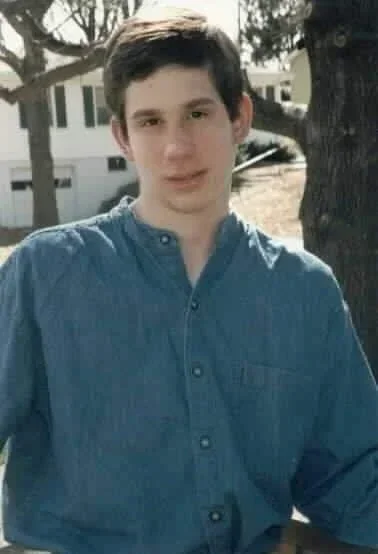
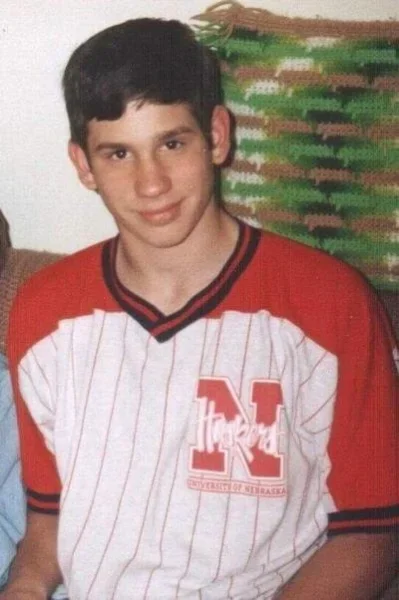
A couple of weeks after her 19-year-old son vanished from Omaha, Kelly Murphy began researching missing people online.
She was shocked by how many she found — people whose families had waited five, 10, even 25 years for answers.
“That won’t be us,” Murphy remembered thinking. “We’ll find out.”
Twenty-five years later, she still doesn’t know what happened to Jason.
Jason Jolkowski disappeared on June 13, 2001, after leaving his Benson-area home to meet a co-worker who would drive him to work. The meeting place, Benson High School, was eight blocks away. He never arrived.
Jason’s case was one of five highlighted by the Omaha Police Department on Nebraska Missing Persons Day, Oct. 17.
As Murphy searched for answers, she learned how to advocate for her son and how to live with the uncertainty of his disappearance. She began helping other families do the same, eventually forming a nonprofit named for the son she remembered as quietly generous and willing to help.
She called it Project Jason.
The underdog
Jason laughed hard, and he laughed easily.
“Like you could just say ‘hot dog’ and have a funny look on your face,” Murphy said. “He would just bust out laughing.”
Jason, his little brother and his parents would sit around the table and try to make one another laugh. Whoever laughed first lost. Jason always lost.
After he disappeared, Murphy learned her son had helped a classmate who used a wheelchair get from class to class and carried his books. He had never told her.
When he was young, his family noticed his language skills lagged behind those of other children his age. They discovered he had learning disabilities that made processing and responding to language difficult, Murphy said. Some motor skills, including riding a bike and driving a car, also took longer for him to learn.
But Jason sought out some of the very things that were difficult for him.
Church was important to him, and he became a lector at Holy Name Catholic Church, reading passages aloud before the congregation.
“For him to do something that kind of flew in the face of those disabilities, like reading — and reading in front of, you know, hundreds of people — was really amazing to me,” Murphy said.
He also had a remarkable memory for sports.
“He was like a walking database of sports trivia,” she said.
He favored underdog teams, something Murphy connected to his own experience of having to work harder at things that came more easily to others.
Jason enrolled in the radio broadcasting program at Iowa Western Community College and went on air at The River, its radio station.
Murphy wondered how her son would manage a job that required him to think and speak on the fly. But behind the microphone, he developed a distinct on-air personality — and a following, she said. He loved it.
When he ran out of money, Jason had to leave school. His family couldn’t afford to help him stay, Murphy said.
But he was working toward returning. He had found a job that offered tuition reimbursement and was excited about the opportunity. He was supposed to start shortly after he disappeared.
The day Jason disappeared
Jason was working part time at Fazoli’s, an Italian-American fast casual chain restaurant at 80th and Cass Streets.
His car was in the shop for hail damage. His parents usually worked out rides around their own jobs: His dad could take him to his evening shift, and his mom could pick him up.
But around 10:30 a.m. on June 13, 2001, Jason’s manager called to ask him to come in early. Jason agreed but said he didn’t have a ride. His manager arranged for a co-worker to pick him up, Murphy said.
They planned to meet at Benson High School. Murphy thinks meeting at a familiar location would have been easier for Jason than giving directions to his home.
Around 10:45 a.m., Jason’s 13-year-old brother, Michael, heard a noise and looked out the window. Jason, dressed for work, was bringing the garbage cans back in from the curb. It was the last time Michael saw his brother.
Jason’s co-worker never saw him at the meeting point. He wasn’t seen on Benson High’s security footage.
The co-worker waited, called the restaurant and waited some more before heading to work without him, Murphy said.
Fazoli’s called Jason’s home a couple times that day. Michael answered and told them his brother had left for work. Eventually, Murphy got a call at work and learned Jason hadn’t arrived.
It wasn’t like him to agree to work a shift and then fail to show up, she said.
That evening, Jason’s dad drove to places his son liked to walk and shoot baskets, looking for him. Murphy stayed home so someone would be there if he called.
“I was just numb, and I just felt like I was glued to the couch by the phone,” she said.
She worried that if she stepped away, she might miss his call.
“Every minute that went by, I was just more and more worried, and just this horrible feeling in the pit of my stomach: Something's wrong,” she recalled. “Something's terribly wrong, and I don't know what it is.”
Her fear intensified as it got dark. Jason was responsible, Murphy said. He wouldn’t want his family worrying about him.
Murphy said she and Jason’s dad believed, based on movies and television, that they had to wait 24 hours to report him missing. They reported his disappearance the next morning.
His credit cards, bank account and cellphone were untouched. His car remained in the repair shop. His last paycheck went uncollected.
'Ambiguous loss'
Early in her search, Murphy connected with another mother whose missing son was around Jason’s age. She eventually joined a small group of five mothers whose sons were around the same age and had been missing for similar lengths of time. They became a support group, Murphy said.
Over time, the other four sons were found deceased, she said. Jason remained missing.
“Jason is the only one still not found,” Murphy said. “And sometimes you think, ‘Why?’”
For Murphy, the uncertainty is part of what she calls “ambiguous loss.”
“You can't go through the process of grief because you don't have that final answer, or you don't know what you're grieving for,” Murphy said.
Michael believed early on that his older brother had died, according to Murphy. He couldn’t fathom that Jason would willingly leave him.
For years, Murphy held both possibilities equally. She thought that might help her cope with whichever answer came.
But an answer isn’t the same as closure, she said.
To Murphy, closure implies having all the answers. Even if she learned Jason had died, questions might remain about what happened to him and whether he suffered. She would still want to know whatever she could.
“You just simply never have those answers,” she said. “But I would take an answer and an incomplete one.”
Project Jason
As Murphy met other families with missing loved ones, she began learning what they could do to help their cases — and how they could cope while waiting.
She attended conferences, spoke with people experienced in missing-persons investigations and worked to establish a missing-persons clearinghouse in Nebraska.
While pursuing that effort, Murphy said, she felt God calling her to use what she was learning to help others. She began researching how to start a nonprofit.
Project Jason grew into an organization that helped families work with law enforcement, gather identifying records and draw public attention to their loved ones’ cases.
It arranged for missing-person posters to appear in trucking publications and distributed posters to homeless shelter staff.
But families needed help living with the uncertainty, Murphy said.
Murphy spent a year developing a weekend retreat where families could learn about coping with a loved one’s disappearance and spend time with people who understood.
One participant initially couldn’t tell the group about her missing loved one, Murphy recalled. The woman had also been unable to work or speak with investigators.
By the end of the weekend, she was laughing and joking. Another attendee later told Murphy the woman had gotten a job and spoken with law enforcement.
Being together and learning about their reactions helped participants understand they weren’t alone, Murphy said.
“Every time we had a retreat, there was always some sort of miracle,” she said. “Every time, always, somebody had a breakthrough.”
Helping people in Jason’s name felt fitting.
The organization’s work, she said, honored his quiet generosity.
In 2018, Murphy retired Project Jason. Running the organization alongside her paid full-time job felt like working two full-time jobs, she said. Volunteers were difficult to find, and she was tired.
She needed to consider what she wanted for the rest of her life.
“It’s time to be me as a person, not the mother of the missing boy,” she said.
Over the years, Murphy has come to believe her son is probably no longer alive. She acknowledges she may never learn what happened to him.
That doesn’t mean she has abandoned hope. But hope takes different forms, she said. For her, it includes the possibility of someday getting an answer.
When Jason first disappeared, Murphy prayed for answers.
Over the years, her prayers changed: “I accept your will, God. If you cannot give me the answer, give me the strength and wisdom.”
That prayer was always answered.
Anyone with information about Jolkowski or his disappearance can call the Omaha Police Missing Persons Unit at 402-444-4123 or the Police Department’s front desk at 402-444-5818.
Anonymous tips can be submitted to Omaha Crime Stoppers at 402-444-STOP, at
www.omahacrimestoppers.org or on the P3 Tips mobile app.



 www.crimewatchers.net

